Alain Lille
 France
- Life and Background
- Theological and Literary Works
- Nature as Mediator
- The Masterpiece: "Anticlaudianus"
- "De Planctu Naturae": Nature's Lament
- Literary Style
Life and Background
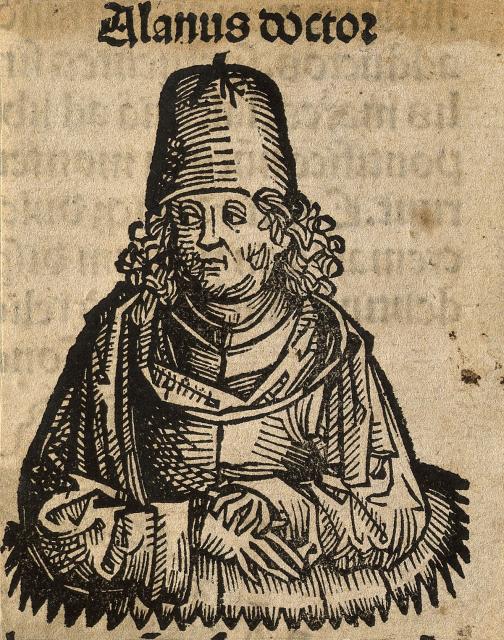
A Renaissance Man: Alain de LilleAlain de Lille was a French theologian, philosopher, and poet who lived from circa 1128 to 1202. A Cistercian monk and Catholic saint (feast day: January 30), Alain was renowned for his vast knowledge, earning him the moniker "Doctor Universalis." His education spanned Chartres, Paris, and Tours, and he later taught liberal arts and theology at the University of Montpellier.
Theological and Literary Works
Proving Faith through ReasonAlain's theological writings demonstrated his belief in the rational provability of religious tenets. His book "Rules of Theology" employed logical constructions akin to mathematical algorithms to construct a deductive theological system.
Nature as Mediator
Influenced by Neoplatonic mysticism, Alain viewed nature as a mediator between God and matter. His "Distinctions of Words" presented an alphabetical index of biblical concepts, aiding in allegorical interpretation.
The Masterpiece: "Anticlaudianus"
An Allegory of VirtueAlain's most famous work, "Anticlaudianus" (1182-1183), is a vast allegorical poem written in hexameters. Inspired by Claudius Claudianus' "In Rufinum," it depicts the union of virtues to create a perfect "divine man" (homo divinus). "Anticlaudianus" became a model for allegorical poetry in the late Middle Ages.
"De Planctu Naturae": Nature's Lament
A Vision of Sin and RepentanceIn "De Planctu Naturae" (The Lament of Nature), Alain presents a prosimetrum where Nature, akin to Plato's Demiurge, appears to him in a dream. Nature denounces human sins, leading to excommunication from divine love for those immersed in mortal vices. This decree prompts all Virtues to extinguish their lamps, awakening Alain.
Literary Style
Eloquence and OrnamentationAlain's literary style was characterized by its sophistication and occasional extravagance. He employed various rhetorical devices, including antitheses, parallelisms, oxymorons, catachreses, periphrastic pleonasms, and wordplay. His works were rich in metaphors and demonstrated his mastery of classical literary techniques.