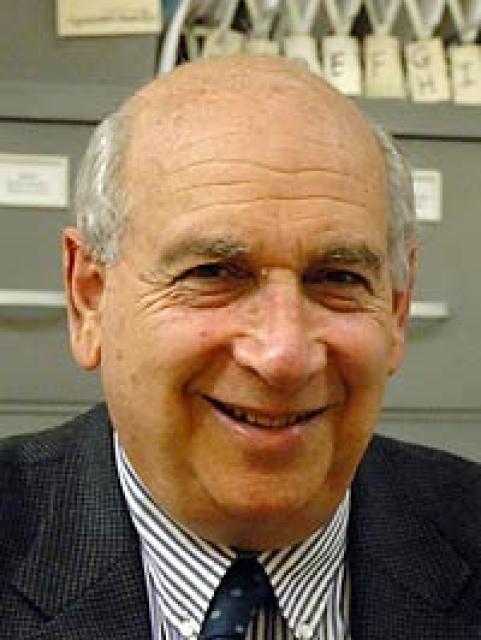
Alan Dundes
 USA
USABiography of Alan Dundes
Alan Dundes was an American scholar and folklorist who dedicated his life to transforming folklore into a full-fledged scientific discipline. He received his education at Yale University, where he studied English language and met his future wife, Carolyn. After completing his studies, Dundes anticipated being called to serve in the military and decided to participate in the Reserve Officers' Training Corps program to become a naval communications officer. However, his plan did not work out as the ship he was assigned to already had a communications officer. Rather than changing ships, Dundes chose to work on the ship's artillery guns in the Bay of Naples for the next two years.

After being demobilized, Dundes enrolled at Indiana University, where he obtained a Ph.D. in folklore. His expertise in the field quickly made him one of the most prominent figures in American and international folklore. He completed his dissertation quickly and went on to teach at the University of Kansas before joining the anthropology department at the University of California, Berkeley. Dundes dedicated 42 years of his career to Berkeley, captivating his students with energetic and lively lectures. He introduced his students to various forms of folklore, including myths, legends, folktales, proverbs, jokes, riddles, slang expressions, folk beliefs, and table manners. As part of his course requirements, students were required to collect and analyze 40 folklore samples, which are still preserved at Berkeley.
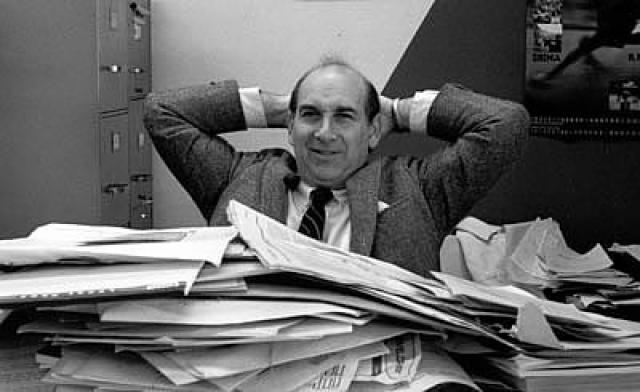
In addition to teaching, Dundes also conducted courses on psychoanalytic analysis of folklore, as he had a particular fondness for this technique. He also spent considerable effort attracting new students to the university, and his lectures for prospective students always drew large audiences with their abundance of jokes and amusing stories. While not all of Dundes' theories received universal recognition, he believed that strong reactions to his words indicated the presence of a valid point.

One of Dundes' most controversial projects was an analysis of the New Testament and the Quran as sources of folklore. Interestingly, it was not his research on religious texts that sparked the most controversy, but rather his analysis of the "homosexual subtext in the terminology and rituals of American football," which even led to death threats. Throughout his career, Dundes staunchly defended the importance of folklore as a scientific discipline.
As he neared the end of his life, Dundes received a $1 million check from one of his former students, enabling him to establish a distinguished professorship in folklore at the university. This ensured that research in the field would continue even after his retirement. The identity of the anonymous donor remains unknown, although they contacted the university to confirm Dundes' existence before sending the check. The check was made payable to the university, but Dundes was allowed to use it at his discretion.
Shortly before his death, Dundes gave an interview to filmmaker Brian Flemming for the documentary project "The God Who Wasn't There." Alan Dundes passed away on March 30, 2005, during one of his seminars. He was 70 years old at the time of his death.



