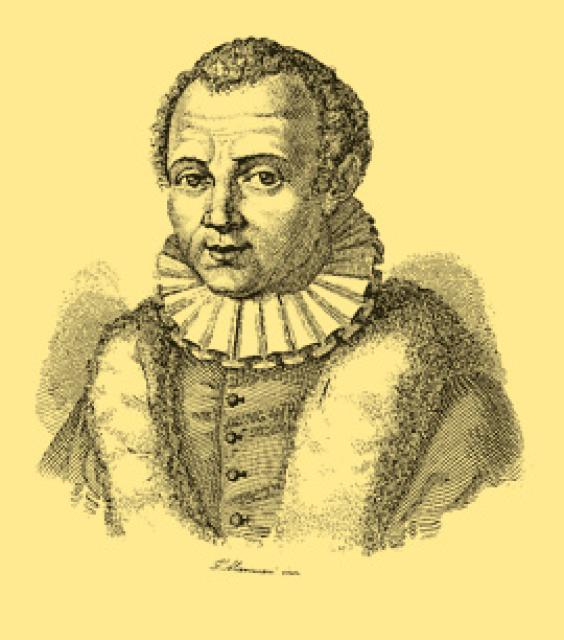
Alberico Gentili
 Italy
Italy- Biography of Alberico Gentili
- Religious Conflicts and Exile
- Contributions to International Law
- Notable Works
- Recognition and Legacy
Biography of Alberico Gentili
Alberico Gentili was an Italian lawyer, diplomat, and professor of civil law. He was born in 1552 in San Ginesio, Italy, into a noble family. His father, Matteo Gentili, was a renowned physician. Alberico studied law at the University of Perugia and obtained his degree in 1572.
Religious Conflicts and Exile
In 1577, Gentili completed work on the legislative acts for his hometown. However, due to religious conflicts, specifically his Protestant beliefs, he, along with his father and brother Scipione, was forced to leave Italy. They traveled through Central Europe before eventually settling in England. Soon after, Gentili became a professor at Oxford University and gained recognition for his view that the church should not interfere in state affairs. His famous statement, "Let theologians remain silent in matters foreign to them," became widely known. While Gentili frequently referred to scripture in his arguments, he interpreted them as a lawyer rather than a theologian.
Contributions to International Law
During the late 16th century, international law was starting to take shape, and Gentili had a significant impact on its development in England. He became one of the founders of modern international law. Throughout his life, Gentili authored about 20 books on theological, legal, and literary topics.
Notable Works
His work "On the Law of Embassies," published in 1585, gained widespread recognition for its systematic approach to diplomatic practices and norms. His first book on international law, "De Legationibus Libri Tres," was released in 1582. In 1589, the first edition of "De Jure Belli Commentationes Tres," later known as "De Jure Belli Libri Tres," was published. This work became a classic in international law and is highly regarded for its practical approach to resolving legal issues. After Gentili's death, his brother Scipione published "Hispanicae Advocationis Libri Duo" in 1913. Over time, Gentili's fame was overshadowed by his famous follower, Hugo Grotius, who became officially recognized as the founder of the doctrine as a whole. However, Grotius openly acknowledged that he drew inspiration from the ideas of Alberico Gentili.
Recognition and Legacy
It was not until the 19th century that Gentili's contributions to international law were fully appreciated. Sir Thomas Erskine Holland played a significant role in promoting Gentili's works, referencing them in his lectures. Since then, Alberico Gentili's writings have gained well-deserved respect, and a monument was erected in his honor in his homeland. Gentili remained a professor at Oxford University throughout his life and also served as a civil law advocate in the High Court of Admiralty and as a legal counsel for the Spanish embassy.
Alberico Gentili passed away in London on June 19, 1608, and was buried at the Church of St. Helen Bishopsgate cemetery. His son, Robert Gentilis, displayed exceptional intellectual abilities, having completed his studies at Oxford University by the age of 12 and becoming a professor there at the age of 17.


