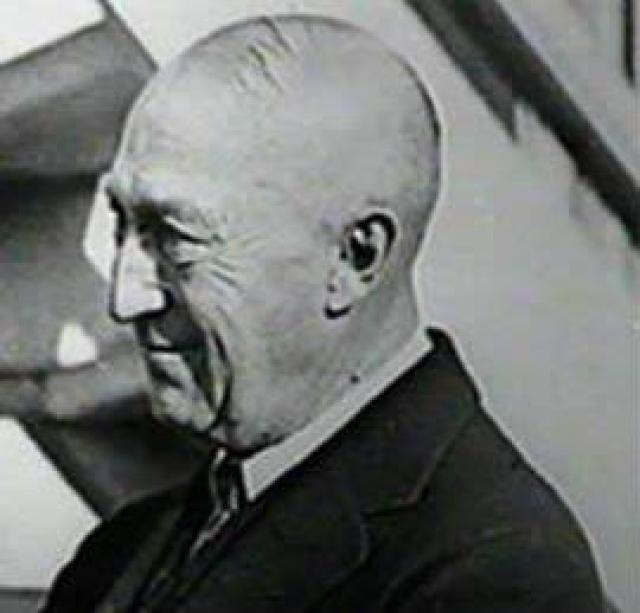
Charles Millar
 Canada
- Charles Vance Millar: Entrepreneur, Prankster, and Notary of the Odd
- Early Life and Education
- Enterprises and Fortunes
- Notoriety for Pranks
- The Curious Testament
- The Great Stork Derby
- Legacy and Impact
Charles Vance Millar: Entrepreneur, Prankster, and Notary of the Odd
Charles Vance Millar, a prominent Canadian lawyer and financier in the late 19th and early 20th centuries, was renowned for his penchant for eccentric pranks and an extraordinarily peculiar—yet meticulously crafted—will, which included a bizarre provision for a substantial bequest to "the mother in Toronto who has borne the greatest number of children."
Early Life and Education
Millar was born in 1853 in Aylmer, Ontario. A brilliant student, he attended the University of Toronto and reportedly achieved an aggregate of 98% across all subjects. Pursuing law, Millar articled with a Toronto law firm before establishing his own practice in the city.
Enterprises and Fortunes
In 1897, Millar acquired the BC Express Company from Stephen Tingley, securing government mail contracts for the Cariboo region of British Columbia. Anticipating the construction of the Canadian Pacific Railway through Fort George (later Prince George), Millar extended BC Express services there and constructed two sternwheel vessels, "B X" and "BC Express."
Recognizing the future of Fort George as a regional hub in northern British Columbia, Millar negotiated the purchase of an 'Indian Reserve,' land set aside for First Nations people, in Fort George. However, the Canadian Pacific Railway had already planned to acquire the Reserve and persuaded the Department of Indian Affairs to cease dealings with Millar. After Millar sued the railway, the defendant agreed to sell him 200 acres of land, which became known as the "Millar Addition," a suburb of Prince George.
Notoriety for Pranks
While Millar achieved success in both finance and legal practice, he became most well-known for his love of practical jokes and pranks, often exploiting human greed. His favorite trick involved leaving money on sidewalks and observing from a concealed location as passersby surreptitiously pocketed the bills.
The Curious Testament
Millar's most extraordinary practical joke was his last will and testament. In his own words:
"This will is intended to be freakish and eccentric, of necessity, as I have no dependents or near relatives, or any duty to leave any of my estate after my death. I am making this will as evidence of the folly of my having accumulated and kept more than I required in my lifetime."
The humorous testament contained numerous whimsical provisions, including instructions to divide ownership of his Jamaican estate "among three men who are known to have great contempt for each other." He also bequeathed $7,000 in stock from the O'Keefe Brewery to seven "well-known Toronto Protestant clergymen, all great prohibitionists," with the proviso that they assume management of the company and subsist on its dividends. Three anti-gambling activists received $25,000 in Ontario Jockey Club stock.
The Great Stork Derby
The most outlandish and lucrative provision, however, was the tenth paragraph of Millar's will. It stipulated that upon the elapse of ten years from his death, the entirety of his estate was to be "converted into cash and paid to the woman in Toronto who has borne the greatest number of children living at that date."
Millar anticipated the possibility of a tie and instructed that his fortune be shared equally among women with the most children. The ensuing contest became known as the "Great Stork Derby."
The Supreme Court of Canada upheld the will, finding no legal grounds for challenge. It nonetheless sparked a decade-long series of legal proceedings, including appeals by distant relatives attempting to invalidate Millar's final wishes. Undeterred, the race for the Great Stork Derby intensified.
Legacy and Impact
Millar's sound investments, particularly in the Detroit-Windsor Tunnel Company, transformed an initial $2 investment into over $100,000. By the time the ten-year waiting period expired after a period of economic deflation, the value of Millar's estate had reached approximately $750,000. The bulk of the "prize money" was divided among four Toronto women, each with nine children.
Two other women received smaller sums of $12,500 each, claiming ties to the primary Stork Derby winners. Thus, Millar, who had once lamented his wealth-hoarding tendencies, posthumously provided for at least 36 children.
The Great Stork Derby was dramatized in the 2002 television movie "The Stork Derby," starring Megan Follows. It has been suggested that Millar's provision in favor of a mother with the most children reflected his skepticism towards "irresponsible procreation" and prevailing restrictions on birth control.





