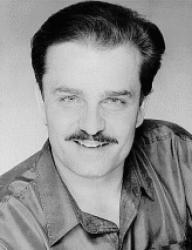
Albert Reiss
 France
Biography of Albert Reiss
Albert Reiss was a German operatic tenor who achieved a successful career in Europe and the United States in the early 20th century. He spent a significant portion of his career on the stage of the Metropolitan Opera in New York, where he performed in over a thousand productions, including several world premieres, from 1901 to 1919.
Early Life and Training
Albert Reiss was born on February 22, 1870, in Berlin, Germany. He initially pursued a career as an actor and appeared in several theatrical plays in Berlin and Strasbourg before deciding to dedicate himself to opera. With the support of Bernhard Pollini and Ernestine Schumann-Heink, renowned Austrian contralto, Reiss began his operatic training. He continued his vocal studies with Wilhelm Vilmar, Julius Lieben, and Benno Stolzenberg.
Professional Career
Reiss made his professional opera debut in 1897, portraying the role of Peter Ivanov in Albert Lortzing's comic opera "Zar und Zimmermann" in Königsberg. The following year, he joined the opera company in Posen, but only stayed for one season. In 1899, Reiss began performing at the Wiesbaden Opera House and remained there until the fall of 1901 when he received an invitation from the Metropolitan Opera in the United States.
Reiss started his collaboration with the Metropolitan Opera with a tour in North America from October to December 1901. His first performance as part of the company took place on October 12 in Toronto, where he played the roles of Remendado in Bizet's "Carmen." On December 23, 1901, he made his debut on the New York stage, performing as a shepherd and young sailor in Wagner's opera "Tristan und Isolde." This marked the beginning of Reiss's long-standing association with the renowned opera house. For the next 18 years, he performed in every season at the Metropolitan Opera, primarily in comedic roles. He also sang in several world premieres, including roles such as Nick in Puccini's "La fanciulla del West," the broom-maker in Humperdinck's "Königskinder," Nial in Parker's "Mona," Richard II of England in De Koven's "The Canterbury Pilgrims," and Ragueneau in Damrosch's "Cyrano." Reiss's farewell performance took place on April 14, 1919, in the role of Remendado, after a total of 1,070 performances at the Metropolitan Opera.
Reiss periodically returned to Europe during his career. From 1902 to 1907, he sang in several productions at the Bavarian State Opera. In 1904, he performed at the Hamburg State Opera and Opéra Garnier in 1910. In the United States, Reiss also appeared with the Chicago Grand Opera Company in 1911 and 1912. He made multiple appearances at the Royal Opera House in London from 1902 to 1905 and 1924 to 1929, singing the role of Valzacchi in Strauss' "Der Rosenkavalier" and his Wagnerian repertoire. In the last ten years of his career, he performed at the Berliner Volksoper from 1923 to 1925 and the Berlin State Opera from 1925 to 1930.
Later Years and Legacy
After retiring in 1930, Reiss settled in Nice, France, where he lived until his death on June 19, 1940, at the age of 70. He left behind a lasting legacy as a talented and versatile performer, renowned for his comic repertoire as well as his interpretations of the roles of David in Wagner's "Die Meistersinger von Nürnberg" and Mime in "Der Ring des Nibelungen."