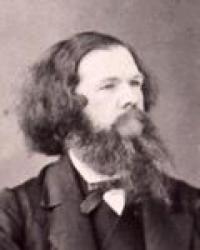
Albert Sechehaye
 Switzerland
Biography of Albert Seche
Albert Seche was a Swiss linguist and one of the leading representatives of the Geneva School. He spent time in Göttingen from 1893 to 1902, where he defended his dissertation on the history of the French imperfect subjunctive tense. This study was one of the first examinations of grammatical history within a systemic context. After completing his dissertation, Seche began teaching at the University of Geneva.
In 1939, he became a professor of general and Indo-European linguistics, succeeding Charles Bally, who retired. Seche spent most of his life in Geneva and graduated from the University of Geneva. Although Albert Seche was one of the most original linguistic theorists of the late 19th and early 20th centuries, he is often overshadowed by his great teacher, Ferdinand de Saussure. Seche posthumously published Saussure's groundbreaking work, "Course in General Linguistics," in 1916 along with Charles Bally. Seche did not attend Saussure's later lectures that formed the basis of the "Course" (although his wife did), and the editors relied on student notes. Many of Seche's own ideas, which anticipated key tenets of structuralism, were already published by the time the "Course" gained worldwide fame under Saussure's name.
Seche's own works were unjustly forgotten after the publication of the "Course." There is a paradoxical hypothesis by P. Wunderli about "Saussure as a student of Seche," which is undoubtedly exaggerated in its polemical nature. The question of priority is complex, considering the oral exchange of ideas between scholars. However, Seche's significant independent contributions to the history of linguistics and the emergence of structuralism are undeniable.
Seche's first book, "Program and Methods of Theoretical Linguistics," was published in 1908 and dedicated to Saussure. In this book, Seche offers a detailed step-by-step framework for building a normal science of language, from phonetics to semantics (as understood by Breal). He criticizes the prevailing comparative-historical linguistics of the time, which he perceives as a purely positivist pursuit of accumulating observable language phenomena throughout history. Seche argues that a normal science is timeless and universally applicable, while a science of facts is historical. He separates all levels of language science into "static" and "dynamic" (similar to Saussure's synchrony and diachrony). According to Seche, the "static" (essentially timeless and universal) facts are primary, while dynamics have a subordinate position (in contrast to Saussure, who considered these two components independent).
In his book, Seche presents original ideas about the universal typological causes of language change and the concept of "dogmatic language" (including the psycholinguistics of child speech). He proposes an extensive concept of synchronic phonology that aligns with the ideas of I.A. Baudouin de Courtenay and N.V. Krushevsky and anticipates many phonological ideas of the 20th century. These directions remained largely unexplored by Saussure and other authors of the Geneva School. A notable feature of Seche's work throughout all stages of his career, which distinguished him from other structuralists, was his attention to the psychological nature of language and speech units.
In his works from the 1920s to the 1940s, Seche incorporates Saussure's ideas from the "Course," although he often debates them. In 1926, he published his second book, "Outline of the Logical Structure of the Sentence," focusing on syntax and examining the relationship between logical and syntactic structures (which were often equated at the time). In his late period articles, he proposed the construction of "organized speech linguistics," emphasizing the insufficiency of Saussure's dichotomy between "language and speech." He attempted to establish sociological definitions of phonemes and other language units.