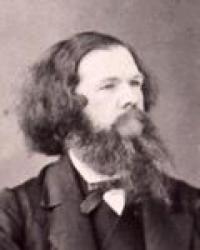
Georgiy Gerovsky
- Georgiy Yulianovich Herovsky: A Renowned Linguist and Ethnologist
- Academic and Research Career
- Ethnographic and Political Involvement
- Life in Post-War Czechoslovakia and Beyond
- Final Years and Legacy
Georgiy Yulianovich Herovsky: A Renowned Linguist and Ethnologist
Early Life and EducationGeorgiy Yulianovich Herovsky was born on October 6, 1886, in Lviv, Ukraine, to a prominent Carpatho-Russian family. His grandfather, Adolf Dobriansky, was a prominent figure in the Rusyn national movement. Growing up, Herovsky spent much of his childhood on his grandfather's estate, where he developed a deep sense of belonging to the Russian people.
He attended a German gymnasium in Innsbruck, Austria, but faced difficulties due to his Orthodox faith. In 1895, his family moved to Chernivtsi, Bukovina, where he completed his secondary education. Despite the dominant influence of Ukrainian nationalism in the region, Herovsky remained steadfast in his commitment to Russian language and culture.
In 1907, Herovsky enrolled in Chernivtsi University to study Slavic philology. In 1909, he continued his studies at the University of Leipzig, where he studied under renowned linguist August Leskien.
Academic and Research Career
Herovsky's academic career was marked by his unwavering belief in the unity of the Russian language and its dialects. He rejected the concept of a separate Ukrainian language, arguing that the Ukrainian literary language was based on a superficial understanding of the dialectal diversity of Eastern Slavic speech.
In his landmark work, "The Language of Subcarpathian Rus" (1934), Herovsky argued that the Rusyn language was a distinct dialect of Russian, characterized by its rich vocabulary and unique grammatical features. This work became a fundamental reference point for future research on the Carpatho-Russian language.
Ethnographic and Political Involvement
Beyond his linguistic studies, Herovsky also conducted extensive research on the history of the Carpatho-Russian movement. He wrote biographies of prominent figures and published historical articles. His political involvement led to his arrest in 1913 by Austrian authorities on charges of treason.
Life in Post-War Czechoslovakia and Beyond
Following World War I, Herovsky relocated to Subcarpathian Rus (today Zakarpattia, Ukraine), where his brother Alexei was a prominent political figure. Despite opposition from Czech authorities, Herovsky continued his research and advocacy for the Rusyn language.
In 1938, Herovsky was elected chairman of the newly established Society of Sciences and Arts of Subcarpathian Rus. However, his political activities drew the attention of Hungarian authorities, who arrested him in 1939 on charges of "pan-Slavism." He was eventually released without any charges being proven.
After the liberation of Zakarpattia in 1945, Herovsky played a significant role in the preservation of the region's cultural heritage. He directed museums and libraries and oversaw the acquisition of valuable historical documents and artifacts.
Final Years and Legacy
Herovsky's final years were marked by the theft of his personal library and archives. He died in Presov, Slovakia, on February 5, 1959. His contributions to the study of Carpatho-Russian language, culture, and history continue to inspire scholars and students to this day.