Albert Uderzo
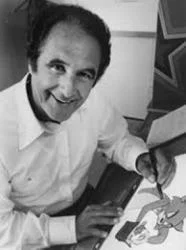
Albert Uderzo helped give the world one of its most beloved comic heroes. The French artist’s supple line, expressive faces, and gift for physical comedy brought the indomitable Gaul Asterix to life, while his long partnership with writer René Goscinny made their village of irrepressible warriors a home for generations of readers. After Goscinny’s death, Uderzo took on the scripts as well as the drawings, carrying the series forward through a new chapter.
Early Life and First Drawings
Uderzo was born in Fismes, France, on April 25, 1927, to a family of Italian immigrants. Drawing became an early passion, and he developed an instinctive, energetic style despite having little formal artistic training. As a young man he worked in illustration and animation, then served in the French army during the Second World War. After the war, he returned to professional drawing, contributing illustrations and comic strips to newspapers and magazines.
In 1951 he met Goscinny, a writer with a sharp ear for comic timing. Their creative partnership developed across several projects, including the adventure strip Oumpah-Pah, which appeared in the magazine Tintin in 1958. Uderzo’s drawing could shift from intricate machinery and detailed settings to wonderfully elastic expressions, giving Goscinny’s jokes a vivid visual rhythm.
The Gaulish Village
Uderzo and Goscinny helped launch the magazine Pilote in 1959. Its first issue introduced their new creation, Astérix le Gaulois. Set in a tiny village resisting Roman rule, the series mixed historical parody, wordplay, and slapstick with a fondness for eccentric characters. Asterix was small and quick-witted; his friend Obelix, a gentle giant, supplied an entirely different kind of force.
The books became an international phenomenon, translated into scores of languages and adapted for film and television. Uderzo’s art was central to their appeal: every crowded banquet, Roman retreat, and flying fish seemed to burst with movement. His confident staging made even a familiar gag feel fresh, while the recurring cast gave readers the pleasure of returning to a world that felt both absurd and warmly familiar.
Carrying On Alone
Goscinny died in 1977 while the two were working on Asterix in Belgium. Uderzo completed that album and then chose to continue the series, now writing as well as drawing. He founded Éditions Albert-René and produced a further run of Asterix adventures, including The Great Divide and Asterix and the Black Gold. The task was a demanding one: he had to preserve a beloved comic voice while shaping stories without the collaborator who had supplied so much of its verbal wit.
Uderzo eventually stepped away from making new albums, with the series continuing under a new creative team. His role in Asterix’s future remained a subject of public discussion, but the characters and visual world he had helped build continued to attract readers well beyond France.
Legacy
Uderzo died at his home in Neuilly-sur-Seine on March 24, 2020, aged 92. He left behind a body of work that ranged beyond one famous hero, yet Asterix remains his defining achievement. The small Gaul’s enduring popularity rests on the rare balance Uderzo and Goscinny found together: satire without cynicism, spectacular comedy, and a deep affection for their unruly characters. Uderzo’s drawings made that balance visible, panel after panel.