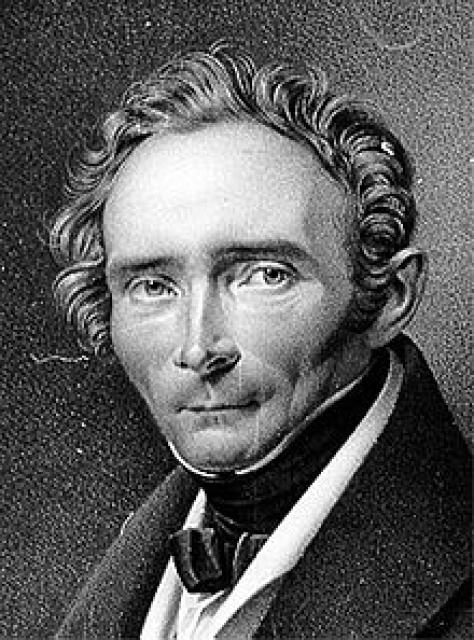
Albrecht Agthe
 Germany
- Early Life and Training
- Leipzig and the Gewandhaus Orchestra
- Building Music Schools
- Berlin Years and Later Life
- Legacy
Albrecht Agthe was a German violinist, pianist, composer and influential music teacher whose work helped shape musical education in several German cities during the first half of the nineteenth century. A member of the Leipzig Gewandhaus Orchestra before he became an educator, he founded music schools in Dresden, Posen and Berlin, adapting the teaching method of John Bernard Logier for groups of students. His pupils included the young Theodor Kullak, who later became a prominent pianist and teacher.
Early Life and Training
Wilhelm Johann Albrecht Agthe was born in Ballenstedt in 1790. He was the son of Carl Christian Agthe, a court organist and composer at the Anhalt-Bernburg court. Music was part of the family environment, and Albrecht’s father gave him his first instruction. After his father died in 1797, he continued his musical education with Friedrich Christian Ebeling, his father’s successor.
As a teenager, Agthe went to Magdeburg, where he studied with the organist Seebach and attended the city’s cathedral school. He later travelled to Erfurt to study counterpoint and composition with Michael Gotthard Fischer. This training in musical structure would serve both his work as a performer and his efforts to teach harmony and instrumental technique.
Leipzig and the Gewandhaus Orchestra
Agthe settled in Leipzig in 1810. He taught music privately and became a violinist in the Gewandhaus Orchestra, where he played second violin. He remained with the ensemble until 1823, an important period in the orchestra’s development as a central institution of Leipzig’s musical life. While in the city, he also began publishing and performing his own compositions, including overtures, piano pieces, songs and church music.
His Leipzig years brought him into a professional world where public concerts and music education were expanding. Agthe combined these two sides of musical life: he performed in one of Germany’s leading orchestras while teaching students in private homes and composing for different settings. Among his works were piano music and pieces for violin and piano, alongside sacred compositions.
Building Music Schools
In 1823 Agthe left Leipzig for Dresden, where he and a colleague founded a music institute using the teaching principles of John Bernard Logier. The approach emphasized the study of harmony as part of instrumental instruction and organized students into groups. The school drew interest from Dresden’s educated public. Composer Carl Maria von Weber attended a public examination after the institute’s first year and expressed satisfaction with the students’ progress, later helping support the school’s continuation.
Agthe was called to Posen in 1826 to establish a similar institution. There, he trained many students, including Theodor Kullak, who was still a child but already attracting attention for his piano playing. Political unrest and the effects of the 1830 Polish uprising made conditions difficult, and Agthe left Posen in 1831 for Breslau. He worked there for a short period before transferring his teaching institution to Berlin in 1832.
Berlin Years and Later Life
Agthe’s Berlin school soon developed a strong reputation, attracting interest from the city’s educated and upper-class families. He also gave private musical instruction to members of the Prussian royal household and was appointed music director. His institution offered a stable base for his work, connecting performance, composition and systematic instruction.
In 1845 an eye condition forced Agthe to give up teaching and close the school. The loss of his sight made it impossible for him to continue the daily work on which his career had been built. He spent the rest of his life in Berlin, where he died on 8 October 1873, aged 83.
Legacy
Agthe’s reputation rests less on a large body of celebrated compositions than on the institutions and pupils he helped cultivate. His professional route from the Gewandhaus Orchestra to music-school leadership gave him practical experience as both performer and teacher. Across Leipzig, Dresden, Posen, Breslau and Berlin, he carried a consistent interest in making musical education more organized and accessible through dedicated schools.
His teaching helped launch the early career of Kullak, later known across Europe as a piano virtuoso and educator. Agthe’s own compositions encompassed orchestral, keyboard, chamber, vocal and sacred music, but his lasting impact was the combination of musical practice and pedagogy. In an era when music schools were becoming important cultural institutions, he helped establish a model of structured instruction that could serve students beyond the private lesson room.