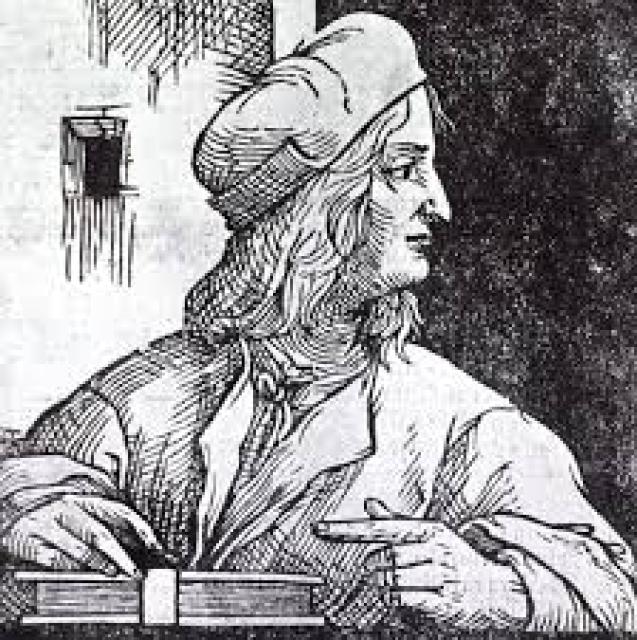
Alessandro Achillini
 Italy
Italy- Alessandro Achillini: The "Second Aristotle"
- Early Life and Career
- Anatomical Discoveries
- Philosophical Contributions
- Family Legacy
Alessandro Achillini: The "Second Aristotle"
Alessandro Achillini (1463-1512), an Italian anatomist and philosopher, earned the epithet "Second Aristotle" for his profound contributions to these fields.
Early Life and Career
Born in Bologna on October 29, 1463, Achillini held prestigious professorships at the universities of Padua and Bologna. He was among the first medical practitioners of the Bologna school to utilize human cadavers in anatomical studies. His numerous anatomical works significantly advanced the science of the time.
Anatomical Discoveries
Achillini made several important anatomical discoveries, including the identification of the submandibular salivary gland's excretory duct in 1500. This duct was later named Wharton's duct in honor of Thomas Wharton, who rediscovered it in 1656.
Philosophical Contributions
Philosophically, Achillini aligned with the Paduan School, which espoused elements of medieval freethinking and materialism. His philosophical inquiries centered on the nature of human intelligence and immortality, as well as the limitations of free will. His magnum opus, "De intelligentiis," exemplified these themes.
Family Legacy
Alessandro Achillini's brother, Giovanni Filoteo Achillini (1466-1538), was a renowned scholar and poet. His writings spanned theology, philosophy, and music. Achillini's grandnephew, Claudio Achillini, also distinguished himself as both a scientist and a poet.