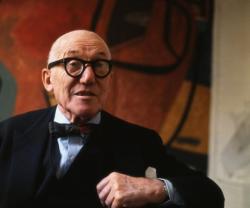
Alexander Ignatiev
- Early Life and Political Activism
- Involvement in the Bolshevik Revolutionary Movement
- Exile and Return
- Military Service and Invention
- Diplomatic Career and Invention
- Contributions to Metallurgy and Industry
Early Life and Political Activism
Alexander Mikhailovich Ignatiev was born in Saint Petersburg, Russia, on October 2, 1877. His father was a prominent veterinarian, and his mother came from a noble family. Ignatiev attended the prestigious 10th Classical Gymnasium in Saint Petersburg. As a student, he became involved in political activism, attending gatherings and distributing illegal literature.
Involvement in the Bolshevik Revolutionary Movement
Inspired by the events of January 9, 1905, when government forces fired upon peaceful protesters, Ignatiev joined the Bolshevik Revolutionary Technical Group in early 1906. He played a pivotal role in establishing a base for transporting weapons and explosives across the border from Finland. In 1907, he became the chief organizer of the group.
Ignatiev also participated in the "Schmidt Inheritance Operation." Nikolai Schmidt, a wealthy merchant, had bequeathed his fortune to the Social Democrats. Ignatiev married one of Schmidt's sisters to overcome legal obstacles.
Exile and Return
Following a party trial that acquitted Victor Taratuta of accusations of being a provocateur, Ignatiev lived abroad from 1910 to 1911. Upon returning to Saint Petersburg, he was arrested and briefly detained in connection with Bolshevik activities.
Military Service and Invention
During World War I, Ignatiev served in the artillery. He designed and tested a specialized device for shooting at aircraft, which he successfully demonstrated to Lenin and Maxim Gorky.
Diplomatic Career and Invention
After the February Revolution, Ignatiev served as the Soviet trade representative in Finland from 1921 to 1925. While in Finland, he created a laboratory to improve his self-sharpening cutting tool, inspired by the teeth of rodents.
Contributions to Metallurgy and Industry
Ignatiev's self-sharpening tool, known as the "Ignatiev Cutter," earned him a Soviet patent in 1926. He continued to refine the tool while serving as a consultant for the Metal Import Company in Berlin. In 1929, he established the State Scientific Research Laboratory of Cutting Tools and Electric Welding in Moscow, which was later renamed the Ignatiev Laboratory.
Ignatiev's legacy in metallurgy and industry lives on through the Vladimir Ignatiev Institute of Tools, which evolved from the Ignatiev Laboratory.