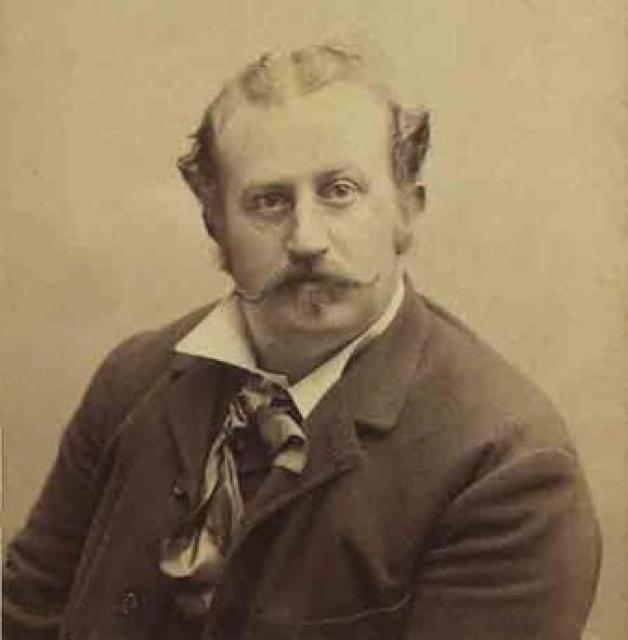
Alexander Kielland
 Norway
- Early Life and Education
- Literary Career
- Dramatic Works
- Political Involvement and Retirement
- Personal Life and Death
Early Life and Education
Alexander Lange Kielland, a renowned Norwegian writer and playwright, was born in Stavanger, Norway, on February 18, 1849. He came from a prominent and wealthy family of industrialists. His father, Jens Zetlitz Kielland, served as a consul, while his grandfather, Gabriel Schanche Kielland, was a renowned shipbuilder. Kielland's extended family included notable figures from the worlds of art and politics, including his sister, the landscape painter Kitty Lange Kielland, and his uncle, the politician Jacob Lange. Despite his affluent upbringing, Kielland developed a deep empathy for the less fortunate.
Literary Career
Kielland initially pursued a legal education but found his true calling in literature. He became a prominent figure in Norway's literary scene, known for his realistic and socially conscious writing. Kielland's works captured the societal and economic changes taking place in the country. Among his most acclaimed novels are "Garman and Worse," "Arbejds folk," "Else," "Skipper Worse," "Fortuna," "Sne," "St. Hans Fest," "Jacob," and "Mennesker og Dyr." His novels have been translated into numerous languages, gaining international recognition.
Dramatic Works
Kielland also wrote plays, including "Tre Par" (1886) and "Professoren" (1888). However, critics generally regarded his plays as less successful than his novels. They were often described as lacking in stage appeal.
Political Involvement and Retirement
From 1889 to 1890, Kielland served as a journalist for "Stavanger Avis." In 1891, he became the mayor of his hometown, Stavanger. In 1902, he was appointed governor of the county of Møre og Romsdal in Molde. Kielland's abrupt retirement from writing in 1891, at the height of his success, remains the subject of speculation and debate. Some attributed it to his reluctance to embrace the emerging romanticism in Norwegian literature, while others believed he chose to focus on his political career.
Personal Life and Death
Kielland suffered from various health issues in his later years, including shortness of breath, heart attacks, obesity, and an uncontrollable appetite. He passed away on April 6, 1906, at the age of 57.



