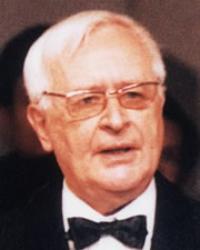
Alexander Vovin
 USA
USA- Education and Early Career
- Academic Positions
- International Guest Professorships
- Current Position
- Research Interests
- Controversial Opinions and Criticism
Education and Early Career
Born in the Soviet Union, [linguist's name] graduated from Leningrad State University in 1983 with a specialization in structural and applied linguistics. In 1987, he earned his PhD in historical Japanese linguistics and ancient Japanese literature.
Academic Positions
Dr. [linguist's name] held positions as a junior researcher at the St. Petersburg Institute of Oriental Studies (1987-1990), assistant professor of Japanese at the University of Michigan (1990-1994), the University of Miami (1994-1995), and assistant professor and associate professor at the University of Hawaii (1995-2003). In 2003, he became a full professor at the University of Hawaii, a position he held until 2014.
International Guest Professorships
During his academic career, Dr. [linguist's name] was a visiting professor at the International Research Center for Japanese Studies, Kyoto (2001-2002, 2008), Ruhr University Bochum, Germany (2008-2009), and the National Institute for Japanese Language and Linguistics (NINJAL) in Tokyo, Japan (2012).
Current Position
Currently, Dr. [linguist's name] serves as a Director of Studies at the School for Advanced Studies in Social Sciences (EHESS) in Paris, France.
Research Interests
Dr. [linguist's name] specializes in Japanese historical linguistics (etymology, morphology, and phonology) and Nara period (710-792) Japanese philology. He has also conducted research on the endangered Ainu language of northern Japan, as well as on the languages of Inner Asia and Kra-Dai languages, particularly those preserved only in Chinese transcriptions.
Controversial Opinions and Criticism
Dr. [linguist's name] has been involved in critical discussions and academic controversies. He has challenged the Puyŏ hypothesis, criticized the "Sino-Caucasian" hypothesis, and argued against a common Altaic proto-language. These views have drawn criticism from scholars such as A. V. Dybo and G. S. Starostin.