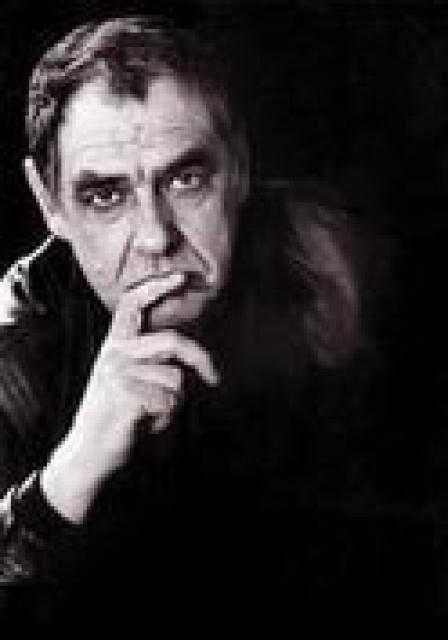
Alexandr Askolidov
 Russia
- Aleksandr Askoldov: The Director Behind the Acclaimed "The Commissar"
- The Creation of "The Commissar"
- Censorship and the Film's Ban
- The Lost and Found Masterpiece
- The Triumphant Return of "The Commissar"
- Post-Commissar Life and Legacy
Aleksandr Askoldov: The Director Behind the Acclaimed "The Commissar"
Early Life and EducationAleksandr Yakovlevich Askoldov was born with a passion for literature. After completing his initial studies in philology, he embarked on a career as a theater critic, lecturing extensively across the vast expanse of the Soviet Union.
The Creation of "The Commissar"
Driven by an insatiable desire to explore the depths of human experience, Askoldov pursued his dream of filmmaking. Inspired by Vasily Grossman's "In the Town of Berdichev," he penned a screenplay that delved into the complexities of the Jewish experience during the Russian Revolution.
Despite the objections and warnings from his colleagues, Askoldov sought the support of the renowned director Sergei Gerasimov, who recognized the exceptional nature of his work. With Gerasimov's blessing, the film was green-lit, marking the beginning of a turbulent chapter in Askoldov's life.
Censorship and the Film's Ban
From its inception, "The Commissar" faced relentless opposition. The film's "Jewish accent," its unflinching portrayal of the revolution's brutality, and the presence of Jewish characters presented a challenge to the prevailing political climate.
After a tumultuous screening for the studio and party officials, "The Commissar" was banned from release for its alleged anti-Semitic and seditious content. Askoldov faced a wave of condemnation, ostracism, and threats. He was fired from his studio, expelled from the Communist Party, and deprived of his livelihood.
The Lost and Found Masterpiece
Undeterred by the backlash, Askoldov embarked on a years-long battle to preserve his creation. The film, which had been ordered to be destroyed, miraculously escaped its fate and was eventually discovered, but not without suffering some irreversible damage.
The Triumphant Return of "The Commissar"
During the era of perestroika, as the Soviet Union experienced a wave of liberalization, the long-hidden "The Commissar" emerged from the shadows. After a public outcry at the 1987 Moscow Film Festival, the film was finally granted permission to be screened for the general public.
The film's release was met with overwhelming critical and popular acclaim. It went on to win numerous international awards and became a testament to the power of artistic expression. Askoldov's reputation as a brilliant and courageous filmmaker was cemented.
Post-Commissar Life and Legacy
Despite the success of "The Commissar," Askoldov chose not to direct another feature film. Instead, he dedicated his later years to teaching and mentoring young filmmakers in Europe and Russia. He penned a novel, "Return to Jerusalem," which has been translated into several languages and remains an important literary work.
Askoldov's unwavering dedication to the pursuit of truth and the preservation of history serves as an inspiration to generations of filmmakers. His impact on contemporary cinema is undeniable, and his legacy continues to resonate as a testament to the indomitable spirit of artistic freedom.


