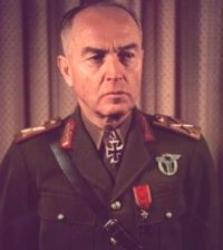
Alexey Galkin
- Early Life and Legal Work
- Newspaper Publishing and Theatre Criticism
- Public Service in Vologda
- Later Years and Legacy
Alexey Galkin (1881–1942) was a Russian journalist, newspaper publisher, theatre critic, and civic figure in Vologda. As the publisher of two of the city’s newspapers and an active participant in its public life, he helped shape the local conversation about culture, education, and urban affairs in the years before the Russian Revolution.
Early Life and Legal Work
Galkin was born in Vologda into a merchant family. He trained in law and worked as an assistant to a sworn attorney, a profession that brought him into contact with the region’s civic and legal institutions. Alongside legal work, he became involved in journalism and publishing, interests that would make him a visible figure in the city.
Newspaper Publishing and Theatre Criticism
Galkin published the newspaper Severnaya Zemlya, which appeared in Vologda in 1906. He also published Vologodsky Listok, a paper that ran from 1909 to 1918 and was known earlier as Vologodsky Spravochny Listok. Through these newspapers, he took part in the developing provincial press of the Russian Empire and covered local public affairs.
He was also active in theatre criticism and cultural life. His newspaper office was associated with the city’s theatrical community, and he took a direct interest in the condition of Vologda’s municipal theatre. In 1913, as chair of the city Duma’s theatre commission, he joined an inspection of the theatre building and took part in discussions about its improvement.
Public Service in Vologda
In 1913, Galkin was elected to the Vologda City Duma for the 1913–1917 term. He joined the Vologda Society for the Study of the Northern Region and the Northern Circle of Fine Arts Lovers, linking civic work with local history and cultural activity. He also served on the board of the city library and participated in social and municipal committees.
His work placed him among a generation of provincial professionals who combined journalism with legal practice and public service. In a city far from the capitals, newspapers, libraries, theatres, and voluntary societies were important spaces for debate and cultural life.
Later Years and Legacy
After the upheavals of the 1917 Revolution, Galkin’s public role changed. He later lived in Leningrad, where he died in 1942. His name remains part of Vologda’s early twentieth-century history through the newspapers he published and his activity in its city government and cultural organizations.