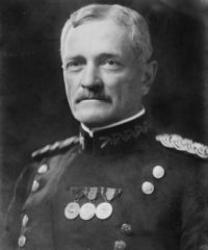
Alfred Iverson
 USA
USA- American Civil War General
- Mexican-American War
- Confederate Army
- Maryland Campaign
- Controversies and the Battle of Chancellorsville
- Battle of Gettysburg: The Beginning of the End
- Post-Gettysburg and the War's End
- Post-War Life
American Civil War General
Born into a politically prominent family in Clinton, Georgia, Alfred Iveson Jr. embarked on a military career at a young age. His father, a staunch secessionist, enrolled him in the Tuskegee Military Institute.
Mexican-American War
At the outbreak of the Mexican-American War, the 17-year-old Iveson joined his father's regiment of Georgia volunteers as a lieutenant. He later resigned from military service in 1848 to pursue law and contracting.
Confederate Army
With the secession of southern states, Iveson resigned from the U.S. Army and joined the Confederate cause. President Davis, a friend of his father, appointed him as colonel of the 20th North Carolina Infantry Regiment, which he played a role in organizing. The regiment participated in the Seven Days Battles, where Iveson distinguished himself at Gaines' Mill. However, his military career hit a roadblock when his regiment suffered heavy losses and he was severely wounded.
Maryland Campaign
Iveson returned to the field for the Maryland Campaign. At South Mountain, his regiment fled alongside the rest of the brigade after the death of its commander. At Antietam, his regiment initially fled but he was able to rally them and return to the battlefield. Subsequently, Iveson was promoted to brigadier general and given command of a brigade.
Controversies and the Battle of Chancellorsville
Iveson's command of his brigade was marred by conflicts with his subordinates. At Chancellorsville, his brigade played a key role in the famous flank attack of Stonewall Jackson's corps. However, his behavior and communication issues alienated his officers.
Battle of Gettysburg: The Beginning of the End
Iveson's military career suffered a major setback at Gettysburg. His brigade launched a poorly planned assault on Union positions, resulting in catastrophic losses. When he called for reinforcements, some of his officers accused him of cowardice.
Post-Gettysburg and the War's End
Stripped of his brigade command, Iveson was briefly assigned to provost marshal duty before being transferred to Georgia. In 1864, he commanded a cavalry division during the Battle for Atlanta. He also achieved some success by capturing Union general George Stoneman at Sunshine Church.
Post-War Life
After the war, Iveson pursued business ventures in Macon and Florida. He later died in Atlanta and was buried at Oakland Cemetery. Iveson's controversial performance at Gettysburg inspired Dan Simmons' novel "Iverson's Pits" and the character of Captain Michael Iverson in the play "Ironic Eight" by Graham Reese.