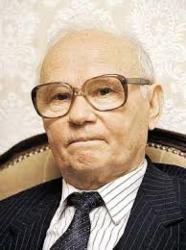
John Pershing
 USA
USA- Early Life and Education
- Military Career
- Professorship and Return to West Point
- Spanish-American War
- Philippine Insurrection and China Boxer Rebellion
- Rise to Brigadier General and Chief of Staff
- Military Attaché and Russo-Japanese War
- Governor of Moro Province
- Punitive Expedition into Mexico
- World War I
- St. Mihiel Offensive
- Generalissimo and Final Offensive
- Postwar Career
- Ambassadorship and Presidency of American War Veteran Movement
Early Life and Education
John J. Pershing was born on September 3, 1860, to a railway official. He received his education at the United States Military Academy at West Point, graduating in 1886.
Military Career
Early Assignments and Indian WarsUpon graduation, Pershing was assigned to the 6th Cavalry Regiment based in Fort Bayard, New Mexico. He participated in campaigns against the Apache and Sioux Native American tribes.
Professorship and Return to West Point
In 1891, Pershing became a professor of military science and tactics at the University of Nebraska. In 1895, he returned to active duty with the 10th Cavalry Regiment at Fort Assinniboine. From June 1897 to 1898, he served as an instructor in tactics at West Point.
Spanish-American War
During the Spanish-American War in 1898, Pershing served with the 10th Cavalry Regiment and distinguished himself in the capture of Santiago de Cuba. He was appointed chief ordnance officer of the Volunteer Forces on August 26, 1898.
Philippine Insurrection and China Boxer Rebellion
In 1899, Pershing was sent to the Philippines, where he participated in operations against the insurgents. He served as adjutant general of the Department of Mindanao from November 1900 to March 1901. In 1901, he saw action in China during the Boxer Rebellion.
Rise to Brigadier General and Chief of Staff
From 1901 to 1904, Pershing served in the War Department General Staff. In 1903, President Theodore Roosevelt promoted Pershing from captain to brigadier general, bypassing 862 senior officers. He became chief of staff of the Southwest Division in 1904.
Military Attaché and Russo-Japanese War
On February 14, 1905, Pershing became military attaché in Tokyo. From March to September 1905, he was attached to the Japanese army in Manchuria during the Russo-Japanese War.
Governor of Moro Province
In 1909, Pershing returned to the Philippines to serve as governor of Moro Province, where he suppressed a native uprising.
Punitive Expedition into Mexico
In 1916, Pershing led a punitive expedition into Mexico, achieving a favorable treaty for the United States on March 15, 1916.
World War I
Commander of American Expeditionary ForcesOn April 6, 1917, the United States declared war on Germany. Pershing was recalled to Washington and appointed commander of the American Expeditionary Forces (AEF) on May 10, 1917. He arrived in Liverpool, England, on June 8, 1917.
St. Mihiel Offensive
Pershing commanded the AEF in the St. Mihiel Offensive from September 12 to 15, 1918. He successfully eliminated the St. Mihiel salient and reached the Noroy-Odumont line.
Generalissimo and Final Offensive
On October 11, 1918, Pershing was appointed generalissimo of American forces in France. He led the AEF in the concluding Allied offensive that resulted in Germany's capitulation.
Postwar Career
Chief of Staff of the ArmyFrom July 1, 1921 to September 13, 1924, Pershing served as chief of staff of the United States Army.
Ambassadorship and Presidency of American War Veteran Movement
In 1925, Pershing was sent to South Africa as an ambassador. He later chaired a commission to establish the border between Chile and Peru. From May 1937 until his death, he served as president of the American War Veterans Movement.