Alfred Marshall
 Great Britain
Biography of Alfred Marshall
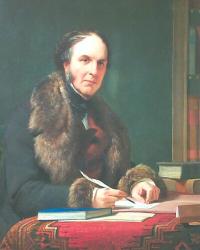
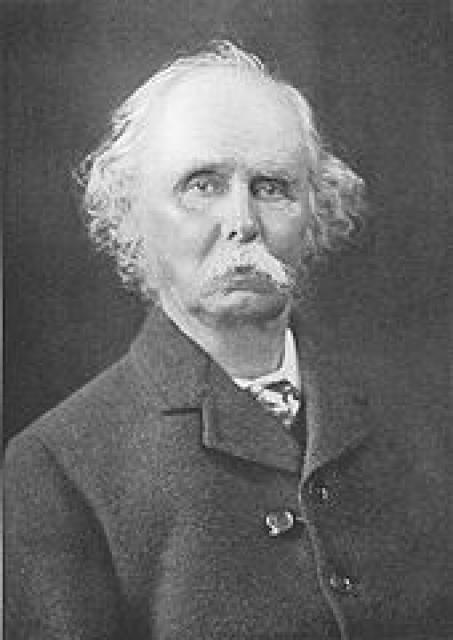
Alfred Marshall, one of the most influential English economists of his time, was born on July 26, 1842, in Bermondsey, London, England. His father was a bank cashier and a devout follower of one of the evangelical churches. Marshall studied at Merchant Taylor's School in Northwood and St John's College, Cambridge, where he showed a inclination towards mathematics. However, due to a mental crisis, he switched from physics to philosophy. He became particularly interested in metaphysics, which led him to ethics, specifically one version of utilitarianism. Eventually, Marshall's intellectual journey settled on economics, as he saw it playing a crucial role in improving the conditions of the working class. Nevertheless, his ethical views continued to be a dominant force in his thinking. Alfred acknowledged that in the real world, economic life is closely intertwined with ethical, social, and political currents – currents that, in his view, cannot be ignored. He saw that the duties of economics lay in improving material conditions, but believed that such improvement would only occur by engaging with social and political forces. His interest in liberalism, socialism, trade unions, women's education, poverty, and progress, in light of his early social philosophy, is reflected in his later works.
In 1868, Marshall began lecturing on the subject of "The Science of Morals." In 1885, he became a professor of political economy at Cambridge, where he remained until his retirement in 1908. During these years, he collaborated with many British thinkers, including Henry Sidgwick, Benjamin Jowett, William Stanley Jevons, John Neville Keynes, and others. Alfred founded the "Cambridge School," which placed special emphasis on increasing returns, the theory of the firm, and welfare economics. After his retirement, the leadership of the school passed to Alfred Pigou and John Maynard Keynes.
He aimed to improve the mathematical rigor of economics and turn it into a scientific profession. In 1870, Marshall wrote several small treatises on international trade and problems of protectionism. In 1879, many of his works were consolidated into one titled "The Pure Theory of Foreign Trade: The Pure Theory of Domestic Values." In the same year, he co-authored the book "The Economics of Industry" with his wife, Mary Paley Marshall. However, while pursuing mathematical precision, Marshall did not want mathematics to supplant economics and turn it into a playground for amateurs. According to him, mathematics should be used as a language of abbreviations rather than a research tool. Marshall also suggested illustrating the conclusions of other economists with vivid examples that play an important role in real life.
Alfred and Mary Paley were married in 1877. He became the first principal of University College, Bristol, later known as the University of Bristol, where he lectured on political economy and economic theory. After the death of William Jevons in 1882, Marshall became the leading British economist of his time. Following the death of Henry Fawcett in 1884, Marshall became the professor of political economy at Cambridge, where he attempted to create a new system of examinations for obtaining distinction in economics. He succeeded in doing so only in 1903.
The success of his book "Principles of Economics" was largely due to the effective use of diagrams, which soon became adopted by other teachers worldwide. Due to worsening health problems, Alfred left the university in 1908. The outbreak of World War I in 1914 prompted him to revisit his studies on international economics, and at the age of 77, he published the book "Trade at the Age" in 1919. This was followed by his work "Money, Credit, and Commerce" in 1923.
Alfred Marshall passed away at the age of 81 on July 13, 1924. His home, Balliol Croft, was renamed Marshall House in his honor in 1991 when it was purchased by Lucy Cavendish College, Cambridge.