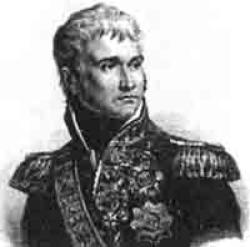
Alfred Windisch-Gratz
 Austria
- Early Life and Military Career
- Military Service
- Suppressing Rebellions
- Prague Uprising
- Vienna Uprising
- Hungarian Revolution
- Later Life and Legacy
- Legacy
Early Life and Military Career
Imperial Prince and Military LineageAlbrecht von Windisch-Graetz, born into the Styrian Windisch-Graetz family, was the son of Count Joseph von Windisch-Graetz, the chamberlain of Archduchess Marie Antoinette. In 1804, Emperor Francis II bestowed upon him the title of Imperial Prince.
Military Service
Windisch-Graetz joined the military in 1804 as a lieutenant in the 2nd Uhlan Regiment of Schwarzenberg. He fought in the anti-French campaigns, becoming a captain in 1805 and participating in the Battle of Ulm. In 1809, he was severely wounded at the Battle of Aspern.
By 1813, Windisch-Graetz had risen to the rank of lieutenant colonel, distinguishing himself at the Battle of Leipzig. During the 1814 campaign, he was promoted to colonel and awarded the Knight's Cross of the Order of Maria Theresa. In 1815, he was appointed military commandant of Austrian troops in Paris.
Suppressing Rebellions
Commander in RevolutionIn 1848, Windisch-Graetz was in Vienna to discuss his potential appointment as commander of an observation army following the revolution in France. As events spiraled out of control, he was given extraordinary powers on March 14 to quell the unrest, but his harsh measures led the emperor to dismiss him to Prague.
Prague Uprising
Unrest soon broke out in Prague as well. On June 11, 1848, gunfire killed Windisch-Graetz's wife and wounded his eldest son. He mobilized troops to Prague, declared it under siege, and initiated a bombardment, crushing the rebellion by June 17.
Vienna Uprising
On October 6, an uprising erupted in Vienna. Windisch-Graetz was promoted to Field Marshal and given command of all Austrian troops (except Radetzky's Italian Corps). He stormed the capital by October 31 and ruthlessly suppressed the rebels, executing Deputy Robert Blum of the Frankfurt Assembly.
Hungarian Revolution
Windisch-Graetz then led the campaign against the Hungarian Revolution. He defeated General Dembinski at Kapolna but later suffered defeats at Gödöllő and Isaszeg by Görgey. He retreated to Pest and was relieved of command on April 12, 1849.
Later Life and Legacy
Post-Revolution AppointmentsWindisch-Graetz was appointed Commander in Olmütz. In 1850, he received the Grand Cross of the Order of Maria Theresa. He represented Austria on a diplomatic mission to Berlin in 1859 and became a member of the House of Lords in 1861.
Legacy
Windisch-Graetz's famous quote, "Ich habe es immer gehalten wie der Mann, der auf einen Ameisenhaufen tritt und dann die herumkriechenden Ameisen zertritt," encapsulates his ruthless approach to suppressing dissent. Although he was a successful military commander, his brutal methods earned him the scorn of future generations.