Alibi Dzhangildin
 Kazakhstan
Biography of Alibi Dzhangildin
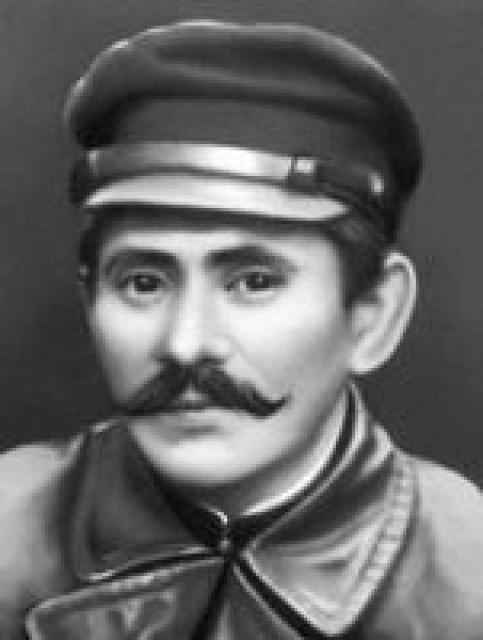
Alibi Dzhangildin was a revolutionary and participant of the civil war, whose name will forever be remembered in the history of Kazakhstan. He was born in 1884 in the village of Koidaul, Turgai region, in a poor yurt. Despite facing difficulties, he managed to receive a primary education and later studied at the Orenburg Spiritual Consistory. However, Alibi soon realized that he had different goals in life. He moved to Moscow, where he met revolutionary-minded students and devoted himself to self-education, reading Marxist literature. It was during this period that he developed a passionate desire to explore the world and learn about the lives of different peoples.
In July 1910, he embarked on a journey that lasted almost two and a half years. Shortly after returning from this trip in 1915, amidst the height of World War I, Alibi Dzhangildin joined the ranks of the Communist Party in Petrograd. During these years, he became a true internationalist and a fearless fighter against czarism. When the Kazakh people, along with other peoples of Central Asia, rose up in a national liberation struggle against czarism, war, and feudal exploitation in 1916, Alibi Dzhangildin, together with Amanzhol Imangaliyev, led an armed uprising in Turgai.
After the overthrow of the czarist regime, Alibi Dzhangildin went to Petrograd, where he established connections with prominent party workers of that time. In the summer of 1917, he returned to his homeland as an instructor for the Petrograd Council. With Bolshevik fervor, A. Dzhangildin spoke at rallies and meetings, exposing the anti-people nature of the Provisional Government and conducting extensive work to unite the Kazakh workers around the Russian working class and its vanguard - the Bolshevik Party.
After the victory of the Great October Socialist Revolution in December 1917, Alibi Dzhangildin was appointed as the temporary commissioner of the Turgai region. In April 1918, the Turgai Oblispolkom sent a delegation led by Dzhangildin to Moscow to obtain weapons, ammunition, and financial resources. On May 14, 1918, Dzhangildin was appointed as the Extraordinary Military Commissioner of the Steppe Territory. In June, he returned to Moscow, where 68 million rubles were allocated for Turkestan and the Turgai region, along with weapons, ammunition, and medicine. An International Detachment was created to deliver this crucial cargo, which arrived in Astrakhan in early August 1918 to begin the march through waterless steppes to support the fighters battling the counter-revolution. Nearly three thousand kilometers were covered by the red cavalry of Dzhangildin's detachment. On November 11, 1918, they arrived at the Chelkar station and handed over the weapons and ammunition to the command of the Orenburg Front.
Alibi Dzhangildin played an active role in the preparation and work of the 1st Congress of Soviets of Kazakhstan, which, according to Lenin's decree of August 26, 1920, proclaimed the creation of the Kazakh Republic. The congress elected him as a member of the Presidium of the first composition of the Central Executive Committee of the Republic. Alibi Dzhangildin represented the party organization of Kazakhstan at the 1st All-Russian Conference of Communist Organizations of the Peoples of the East in January 1921. For several years, he served as the Deputy Chairman of the Kazakh Central Executive Committee, the Deputy Chairman of the Presidium of the Supreme Soviet of the Kazakh SSR, the People's Commissar of Social Security, and the Chairman of the "Koshchi" Union.
When the Great Patriotic War broke out, Alibi Dzhangildin requested to be sent to the front. However, his experience and knowledge were needed in the rear. He devoted much of his energy to the formation of military units and formations in Kazakhstan, worked tirelessly to accommodate people and equipment evacuated to Kazakhstan from the occupied western regions of the country, and conducted extensive political and propaganda work among young communists and soldiers being sent to the front. Alibi Dzhangildin was awarded the Order of Lenin. He passed away in 1953.