Georges Couthon
 France
- Biography of Georges Couthon
- A Change in Views
- Anti-Monarchist Stance
- Role in the Committee of Public Safety
- Radical Measures
- Downfall and Execution
Biography of Georges Couthon
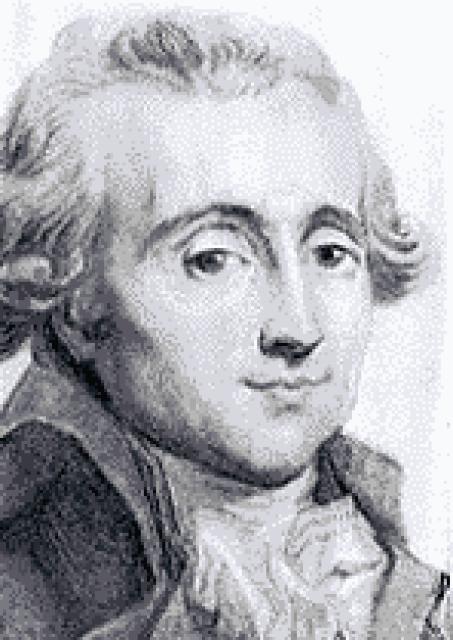
Georges Couthon was a prominent figure during the French Revolution. Born in 1755 in the region of Auvergne, he began his career as a lawyer. However, his life took a downturn when he contracted syphilis, which eventually led to paralysis in both of his legs.
A Change in Views
In 1791, Couthon wrote a comedy called "The Converted Aristocrat," aimed at defending constitutional monarchy. However, his perspective shifted when King Louis XVI attempted to flee Paris. He proposed to the local club to send an address to the National Assembly, urging the dethronement of the king.
Anti-Monarchist Stance
Elected as a member of the Legislative Assembly, Couthon immediately made his anti-monarchist views known. In the National Convention, he voted for the execution of the king without appealing to the people or delaying the decision. It was during this time that he became close to Robespierre and submitted to his influence.
Role in the Committee of Public Safety
As a member of the Committee of Public Safety, Couthon participated in military operations in the rebellious city of Lyon. Despite his position, he showed relative moderation by not enforcing the Convention's decree to destroy the city. From December 21, 1793, to January 4, 1794, Couthon served as the president of the National Convention.
Radical Measures
Couthon was instrumental in the passing of the law on 22 Prairial, allowing for the guillotine execution of suspects without much trial process. His speech at the Jacobin Club on the 3rd of Thermidor, where he vaguely suggested the need to cleanse the Convention of "four or five scoundrels," contributed to the events leading to the Thermidorian Reaction.
Downfall and Execution
The day after his speech, Couthon attempted to stab himself in a failed suicide attempt. However, this did not save him from the guillotine. On the 9th of Thermidor, he was executed along with other prominent figures of the Revolution.