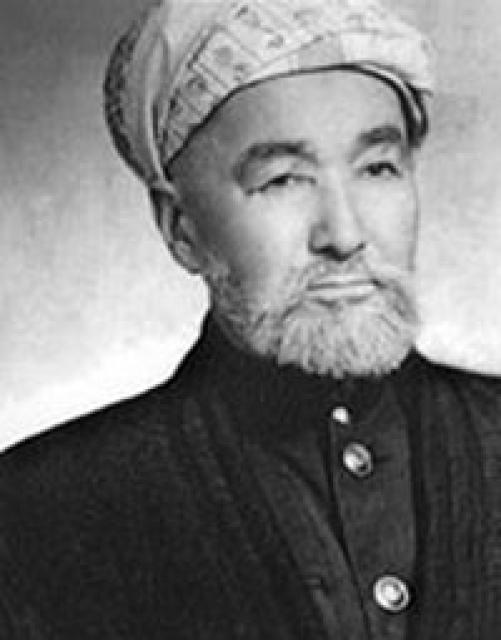
Alihon Tura Saguniy
- Early Life and Education
- Religious Career and Criticism of Soviet Rule
- Escape and Arrival in Xinjiang
- Anti-Chinese Activities and Revolution
- President of the East Turkestan Republic
- Capture and Imprisonment
- Literary Contributions and Legacy
Early Life and Education
Ali Khan Tura was born in Tokmak, Kyrgyzstan, into a devout Muslim family. He pursued higher religious education at the Bukhara madrasah, where he earned the nickname "Tura" for his profound knowledge of theology. Tura performed the pilgrimage to Mecca twice, in 1905 and 1924.
Religious Career and Criticism of Soviet Rule
From 1915 to 1923, Tura taught theology at the Bukhara Islamic madrasah. However, his criticism of Soviet authority led to four arrests and imprisonment in Bishkek. In 1930, he faced another arrest and was sentenced to 10 years in the Gulag.
Escape and Arrival in Xinjiang
Escaping from prison, Tura crossed the Soviet-Chinese border in 1931 and settled in Ghulja, Xinjiang. He engaged in preaching, healing, and became the imam of the local mosque. His popularity among Muslims grew, and he eventually became the imam of the principal mosque, "Beitullah."
Anti-Chinese Activities and Revolution
In 1937, Tura's anti-Chinese sermons led to his imprisonment again. Released through the efforts of religious leaders, he became actively involved in clandestine anti-Chinese resistance. In 1943, he founded the "Organization for the Liberation of East Turkestan."
Together with influential figures from the Ili region, Tura organized an uprising in 1943. Following the siege of Ghulja by rebels, his organization played a key role in the revolt within the city.
President of the East Turkestan Republic
On November 12, 1944, the East Turkestan Republic was proclaimed. Ali Khan Tura was elected as its first president. However, his tenure was short-lived.
Capture and Imprisonment
On July 28, 1946, Tura was abducted by Soviet intelligence and secretly taken to the USSR. He remained under house arrest until the end of his life.
Literary Contributions and Legacy
Despite his political imprisonment, Tura continued to write historical and theological works. He was known as the "Imam Bukhari of the 20th Century" and translated "The Institutes of Timur." He also authored the multi-volume "Tarihi Muhammadiya" on the history of Islam.