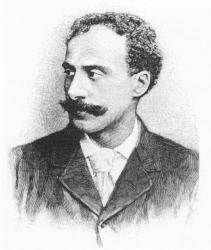
Allan Kaprow
 USA
USA- Allan Kaprow, the Father of Happenings
- From Abstract Expressionism to Happenings
- Founding of the Hansa Gallery and Early Experiments
- The Influence of Action Painting and Collage
- The Legacy of Jackson Pollock and the Birth of Happenings
- From Collage to Environments to Happenings
- Contemporaries and Parallel Movements
Allan Kaprow, the Father of Happenings
Early Life and Artistic InspirationAllan Kaprow was an American artist and art theorist who significantly impacted the art world in the mid-20th century. He began his artistic journey by studying art, music, and art history. The influence of renowned composer John Cage and abstract expressionist Jackson Pollock played a pivotal role in shaping his artistic vision.
From Abstract Expressionism to Happenings
Initially drawn to abstract expressionism, Kaprow quickly embraced a more experiential approach to art. His early works explored the use of expressive brushstrokes and real-life subjects. However, he soon abandoned traditional painting for environments and the novel concept of happenings.
Founding of the Hansa Gallery and Early Experiments
Kaprow founded the Hansa Gallery in Greenwich Village, where he exhibited his works and fostered a creative space for fellow artists. His paintings showcased a blend of abstract and figurative elements, evolving into more dynamic and three-dimensional artworks.
The Influence of Action Painting and Collage
Inspired by Pollock's action painting, Kaprow emphasized the participation of the viewer in the creation of his art. He developed "action-collage" techniques that incorporated materials such as straw, crumpled newspapers, and blinking lights.
The Legacy of Jackson Pollock and the Birth of Happenings
Kaprow's article, "The Legacy of Jackson Pollock," argued that Pollock's paintings had transcended the boundaries of canvas, becoming immersive environments. This inspired him to create total environments, leading to the birth of happenings, interactive performances that blurred the lines between audience and artwork.
From Collage to Environments to Happenings
Kaprow observed that his works were expanding into space, incorporating more elements. He recognized that the audience became an integral part of these environments. By actively involving viewers, he facilitated a shift from traditional art objects to immersive experiences.
Contemporaries and Parallel Movements
Kaprow was not alone in his artistic exploration. Other artists such as Robert Rauschenberg, Claes Oldenburg, and Jim Dine experimented with theatrical elements in their work. In Europe, Wolf Vostell and Fluxus, and in Japan, the Gutai group, pursued similar artistic directions.