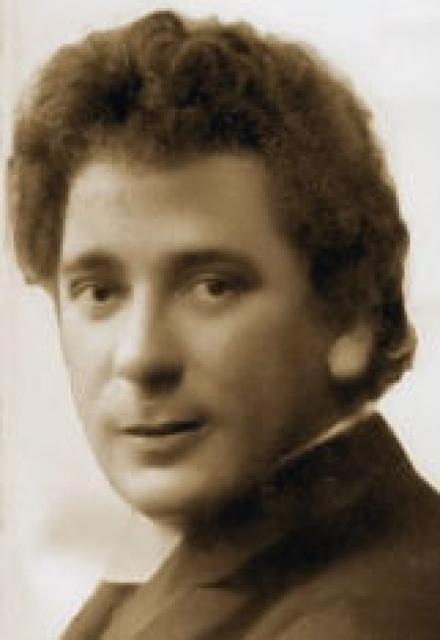
Alois Burgstaller
 Germany
- Alois Burgstaller, German Operatic Tenor
- Cosima Wagner's Patronage and Operatic Debut
- Bayreuth Festival Performances and International Acclaim
- American Debut and Critical Success
- "Parsifal" Controversy and Bayreuth Ban
- Retirement and Later Years
Alois Burgstaller, German Operatic Tenor
Early Life and Discovery of TalentAlois Burgstaller was born on September 21, 1872, in Holzkirchen, a small town in Southern Germany. His early years were spent as an apprentice watchmaker. However, his passion for singing became evident while performing in amateur theater at a local church.
Cosima Wagner's Patronage and Operatic Debut
Cosima Wagner, the widow of renowned composer Richard Wagner, recognized Burgstaller's vocal abilities. She encouraged him to consider a career as a professional singer. Burgstaller began studying opera at the Frankfurt and Bayreuth Schools, under the guidance of Julius Kniese. He made his operatic debut at the Bayreuth Festival in 1894, in a minor role.
Bayreuth Festival Performances and International Acclaim
From 1896 to 1903, Burgstaller ascended to significant Wagnerian roles at the Bayreuth Festival, including Siegfried, Siegmund, Erik, and Parsifal. His performances also caught the attention of major European opera houses, including Paris, Zurich, Budapest, London, Amsterdam, and Moscow.
American Debut and Critical Success
Burgstaller's American debut took place on February 12, 1903, at the Metropolitan Opera in New York City. He sang the role of Siegmund in "Die Walküre." He went on to perform throughout the United States for the following six years, in cities such as San Francisco, Boston, Philadelphia, Chicago, Pittsburgh, and Los Angeles.
"Parsifal" Controversy and Bayreuth Ban
In 1903, Burgstaller played a pivotal role in the first American production of Richard Wagner's "Parsifal" in New York City. However, this performance violated German copyright law, angering Cosima Wagner. As a result, Burgstaller, baritone Anton van Rooy, and conductor Alfred Hertz were never invited back to the Bayreuth Festival.
Retirement and Later Years
Burgstaller retired from the stage and settled in St. Quirin, on the shores of Lake Tegernsee. He passed away on April 19, 1945, just as World War II was drawing to a close. He was buried in the local cemetery, and a street in the town was named in his honor.


