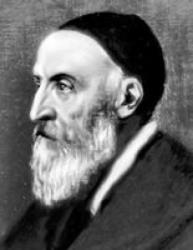
Alonso Sanchez
 Spain
SpainLife and Career of Alonso Sánchez Coello
Early Life and TrainingAlonso Sánchez Coello was born in the Valencian town of Benifairó de les Valls in the early 1530s. As a child, he was taken to Portugal, where he was raised. King João III of Portugal recognized his artistic talent and sent him to Flanders to study.
In Flanders, Sánchez Coello spent several years in the household of Cardinal Granvelle, who was a patron of the artist Antonio Moro. He became Moro's pupil. In 1550, Sánchez Coello returned to Portugal, where he worked at the court of King João III for several years. When Moro visited Lisbon on diplomatic missions, he met with his disciple.
In 1555, Sánchez Coello moved to Spain. At the court of Philip II, he continued his apprenticeship under Moro. After Moro abruptly left Madrid for unknown reasons, Sánchez Coello was appointed the king's court painter.
Artistic Style
Sánchez Coello's portraiture is highly valued. He painted portraits of King Philip II, his children Infanta Isabella Clara Eugenia and Catherine Michaela, Don Carlos, and other members of the royal family and the aristocracy.
Sánchez Coello worked in the canon of Spanish court portraiture, which had been established by Antonio Moro during his service to the Spanish king. He followed his Flemish teacher's restrained approach to the sitter, using formal poses (see Moro, Antonio). His emphasis on static poses, meticulous detailing, and an unflattering portrayal of the Habsburg dynasty's often plain features is evident in his work.
Unique Characteristics
While Sánchez Coello's work shares similarities with Moro's, it also exhibits unique characteristics. He was less proficient in drawing and less accurate in rendering volumes. However, these perceived shortcomings transformed into aesthetic qualities in his paintings.
Sánchez Coello excelled in the subtle handling of light. He used a limited palette of grays and silvery tones, which gave his portraits an air of elegance and refinement. This subtle idealization tempered the realism of his subjects' appearances.
One of his most distinctive contributions to Spanish painting was his use of a neutral gray background in portraits, instead of the landscape or interior scenes that were prevalent in Italian Renaissance portraiture.
Legacy
Sánchez Coello remained in the position of court painter until his death in 1588, enjoying the favor of the king and the attention of the aristocracy. King Philip II was the godfather to two of his seven children. His post was inherited by his pupil, Juan Pantoja de la Cruz.
Pantoja de la Cruz further formalized the canon of Spanish court portraiture established by Sánchez Coello: static poses, neutral backgrounds, meticulous costume details, and an unvarnished rendition of physiognomy.