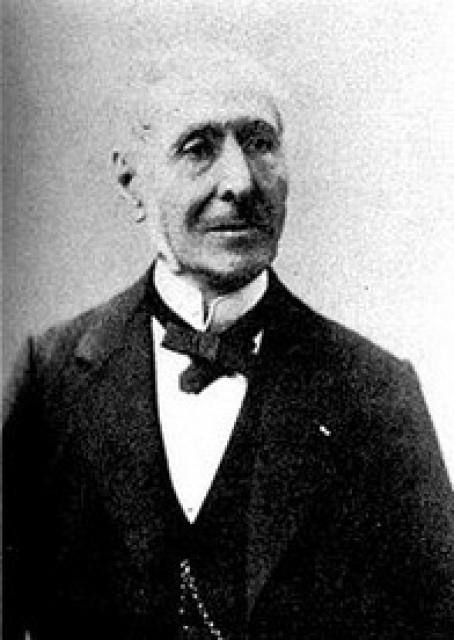
Alphonse Candolle
 Switzerland
- Alphonse de Candolle: A Biography
- Early Life and Education
- Contributions to Botany
- Academic Career and Other Contributions
- Legacy and Death
Alphonse de Candolle: A Biography
Alphonse de Candolle was a Swiss botanist and biogeographer, known for his groundbreaking contributions to the field of plant science. He was born on October 28, 1806, in Geneva, Switzerland, as the son and successor of his father, Augustin Pyrame de Candolle.
Early Life and Education
De Candolle initially pursued a career in law and became a doctor of law in 1829. However, his passion for nature led him to switch his focus to the study of plants. He joined his father's renowned botanical work and inherited his father's chair at the University of Geneva in 1841.
Contributions to Botany
De Candolle made significant contributions to the field of botany throughout his career. He created one of the first scientific concepts on the origin of cultivated plants in 1883. He also developed the first code for botanical nomenclature, which was adopted by the International Botanical Congress in 1867 and served as the precursor to the current International Code of Nomenclature for algae, fungi, and plants (ICN).
De Candolle's research focused on explaining the geographic distribution of plants, taking into consideration both ecological and historical factors. He believed that the distribution of plants could be attributed to the outlines of continents in previous geological epochs, the climatic conditions of that time, and the duration of plant species' existence. He also advocated for the idea of multiple centers of plant origin.
In addition to his botanical work, De Candolle conducted a notable study on the religious inclinations of foreign members of the French and British Academies of Sciences during the Scientific Revolution. His research revealed that Protestants were more represented in both academies than Catholics.
Academic Career and Other Contributions
De Candolle served as a professor of natural history and the director of the botanical garden at the University of Geneva from 1835 to 1850. In 1846, he discontinued his teaching activities to focus solely on scientific research. He actively participated in the affairs of his country and was elected several times as a member of the Geneva Legislative Assembly.
De Candolle continued his father's work on the "Prodromus systematis naturalis regni vegetabilis" and expanded it to include eight volumes on monocotyledons. He also wrote the "Monographiae Phaneroganorum," which consisted of five additional volumes and further expanded on the classification of plants. These monumental works, created by three generations of the de Candolle family, became an essential foundation for plant systematic research.
De Candolle's most significant contributions revolved around plant geography, a field he had a particular affinity for. In 1855, he published "Géographie botanique raisonnée," in which he established laws and principles of plant distribution based on extensive and accurate research. He also conducted extensive research on the origin of cultivated plants, which was later published as "Origine des plantes cultivées" in 1883.
Furthermore, De Candolle attempted to codify the rules of botanical nomenclature in 1867 with the publication of "Laws of Botanical Nomenclature." He also wrote several other works, including a collection of articles titled "Histoires des savants et des sciences."
Legacy and Death
Alphonse de Candolle passed away on April 4, 1893, in Geneva, at the age of 86. His contributions to botany, particularly in the fields of plant geography and botanical nomenclature, left a lasting impact on the scientific community. His works continue to be regarded as fundamental references in plant systematic research and have been widely recognized for their scientific rigor and comprehensive analysis.