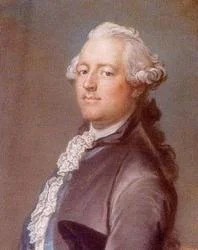
Alwin Berger
Alwin Berger was a German gardener and botanist whose practical horticultural training led to an influential career studying succulent plants. Born on August 28, 1871, in Möschlitz, Thuringia, he began as an apprentice gardener and developed his botanical expertise through work in several European gardens. His long appointment at the Hanbury Gardens at La Mortola in Italy gave him access to an exceptional collection of plants, especially cacti and succulents. Berger later worked in Stuttgart and the United States, and is remembered for his contributions to succulent plant taxonomy and horticulture.
From Gardener to Botanist
Berger grew up in a farming family and was drawn to plants from an early age. After school, he trained as a gardener at the princely court garden in Ebersdorf. Between 1887 and 1897, he held positions at nurseries and botanical gardens in Germany, gaining experience with both plant cultivation and systematic botany.
In 1897, Berger became curator of the Hanbury Gardens at La Mortola, near Ventimiglia on the Italian Riviera. The garden, founded by Thomas Hanbury, contained extensive subtropical collections. Berger managed its living plants and scientific collections, documented species growing there, and produced botanical photographs. The garden’s outdoor climate also let him study large succulents in conditions that were difficult to reproduce in German greenhouses.
Research on Succulents
At La Mortola, Berger concentrated increasingly on cacti and other succulents, encouraged by the gardener Karl Sprenger. He published on a broad range of plants, but his work on succulent classification became especially influential. His books included illustrated guides to succulent euphorbias, mesembs and portulacas, stapeliads, and cacti. His 1915 monograph on agaves became a notable reference in the field.
Berger’s work joined botanical description with horticultural knowledge. He recorded how plants grew and could be cultivated, while also proposing scientific names and classifications. Many botanical names and combinations attributed to him remain part of the historical record of plant taxonomy.
Later Career
The First World War forced Berger and his family to leave Italy in 1915. He returned to Germany and served as a court garden director at Stuttgart’s Wilhelma gardens. In 1923 he moved to the United States to work on small-fruit research, including berries. He returned to Stuttgart in 1926, joining the botanical department of the Natural History Museum; by 1929 he was curator of its collections.
Berger died in Stuttgart on April 21, 1931. His wife was Elise Berger, and they had two children, Fritz and Iris Verna. The combination of skilled gardening, careful observation, and sustained research made him an important figure in the study and cultivation of succulents.