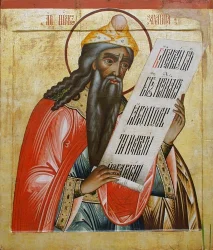
Amos
Amos was an eighth-century BCE prophet from Tekoa in Judah, remembered for challenging injustice and religious complacency in the northern kingdom of Israel. The book that bears his name presents a voice sharply critical of exploitation and inequality, insisting that worship cannot be separated from ethical conduct. Little is known about his life beyond the biblical text.
From Tekoa to Israel
The opening of the Book of Amos places his ministry during the reigns of Uzziah of Judah and Jeroboam II of Israel, a period usually dated to the middle of the eighth century BCE. The text describes him as a herdsman and a cultivator of sycamore figs. He portrays himself not as a member of a professional prophetic guild but as someone called from ordinary work to deliver a message.
Amos traveled from Judah to speak in the northern kingdom, particularly at Bethel, an important religious center. His preaching took place during a time of prosperity for some Israelites, but the book depicts that wealth as accompanied by sharp social divisions and the exploitation of the poor.
Prophetic message
The Book of Amos opens with judgments against neighboring nations, then turns its critique toward Israel. Amos condemns violence, corruption in the courts, debt exploitation and the luxurious security of the wealthy. He warns that religious festivals and sacrifices have no value when people deny justice to their neighbors.
One of the book’s most enduring passages calls for justice and righteousness to flow like water. Its message challenges the idea that national prosperity or ritual observance can guarantee divine favor. Amos presents moral responsibility as central to the community’s relationship with God.
The text also recounts a confrontation with Amaziah, the priest at Bethel, who objected to Amos’s prophecies against the royal house. Amos responds that he had not chosen prophecy as a profession; rather, he had been called to speak. The episode underscores the tension between prophetic criticism and the interests of political and religious authorities.
Book and legacy
The Book of Amos is a collection of oracles, visions and narratives associated with the prophet. Scholars generally understand its core traditions as rooted in the eighth century BCE, while recognizing that the text was transmitted and shaped over time. The prophet’s precise biography and the chronology of his ministry remain uncertain.
Amos became one of the earliest biblical prophets whose messages were preserved in a separate book. In Jewish and Christian traditions, he is remembered as a forceful advocate for justice and accountability. His insistence that public ethics matter as much as religious observance has continued to influence moral and theological reflection.