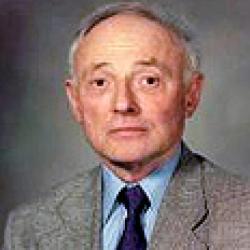
Anatoliy Shirshov
 Russia
- Anatoly Illarionovich Shirshov: A Soviet Mathematician
- Military Service and Postgraduate Studies
- Career at the Institute of Mathematics
- Legacy and Contributions
Anatoly Illarionovich Shirshov: A Soviet Mathematician
Early Life and EducationAnatoly Illarionovich Shirshov was born on August 8, 1921, in the village of Kolyvan, Novosibirsk Oblast. He graduated from high school in Aleisk, Altai Krai, in 1939 and entered Tomsk University in the same year. After his first year, he transferred to the correspondence department and worked as a mathematics teacher in Aleisk.
Military Service and Postgraduate Studies
In 1942, Shirshov volunteered for the front during World War II as part of the 6th Rifle Corps of Siberian volunteers. He fought on the Western, Kalinin, and 2nd Belorussian fronts. After the war, he worked at the Stanichno-Lugansk secondary school in Voroshilovgrad Oblast while studying at the correspondence department of Voroshilovgrad Pedagogical Institute, which he graduated from in 1949.
In 1950, Shirshov was accepted into the postgraduate program at the Faculty of Mechanics and Mathematics of Moscow State University (MSU), marking the beginning of his scientific career. In 1958, he defended his doctoral dissertation in algebra.
Career at the Institute of Mathematics
From 1960 until his untimely demise, Shirshov worked at the Institute of Mathematics of the Siberian Branch of the USSR Academy of Sciences (SB AS USSR). He served as Deputy Director of the Institute from 1960 to 1974 and headed the Department of Theory of Rings. Shirshov's accomplishments at SB AS USSR earned him three Orders of the Red Banner of Labour and several medals.
Legacy and Contributions
Anatoly Illarionovich Shirshov passed away on February 28, 1981. Under his guidance, numerous doctoral dissertations were defended, and five of his students became doctors of science. Shirshov's students continue his work in various institutions, particularly in Siberia and the Far East.
Shirshov was an active member of several scientific councils and editorial boards, including "Siberian Mathematical Journal," "Quant," and "Algebra and Logic." He was a member of the bureau of the Department of Mathematics of the USSR Academy of Sciences and the National Committee of Soviet Mathematicians.
Throughout his career, he taught at Novosibirsk State University and made significant contributions to the theory of rings, associative rings, and algorithmic problems in algebra. His work and that of his school have received widespread international recognition.