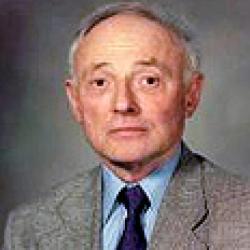
Vito Volterra
 Italy
Italy- Vito Volterra: A Brilliant Italian Mathematician and Physicist
- Academic Career
- Contributions to Science
- Political Activism
- Recognition and Legacy
Vito Volterra: A Brilliant Italian Mathematician and Physicist
Early Life and EducationVito Volterra was born on May 3, 1860, in Ancona, Italy, to a poor Jewish family. His father passed away when Vito was only two years old. Nevertheless, this did not deter him from pursuing his passion for mathematics. At the tender age of 11, Volterra was inspired by Jules Verne's novel "From the Earth to the Moon" to calculate the trajectory of a projectile in the atmosphere. He also delved into Legendre's geometry. By the time he was 13, he was tackling three-dimensional problems and achieved success in dividing time into short intervals, enabling him to consider force as a constant.
Academic Career
Volterra's impoverished background did not hinder his academic pursuits. He attended lectures at the University of Florence before moving to Pisa. In 1883, he became a professor at the University of Pisa, followed by positions at the University of Turin in 1893 and the University of Rome in 1900.
Contributions to Science
Volterra's groundbreaking contributions extended across various scientific disciplines. His research in partial differential equations, elasticity theory, integral and integro-differential equations, and functional analysis earned him widespread recognition.
Political Activism
During World War I, Volterra played a pivotal role in improving dirigibles, for which he was awarded the Iron Cross, Germany's highest military honor. In politics, he became the youngest senator in the Italian Kingdom in 1905. However, his refusal to pledge allegiance to the fascist government in 1931 led to his dismissal from all Italian universities. Subsequently, he lived primarily abroad, returning to his homeland shortly before his death.
Recognition and Legacy
In 1938, the University of St Andrews in Scotland awarded Volterra an honorary doctorate. Unfortunately, he was unable to attend the ceremony due to ill health. Vito Volterra passed away on October 11, 1940, in Rome. His legacy continues to inspire generations of mathematicians and physicists.