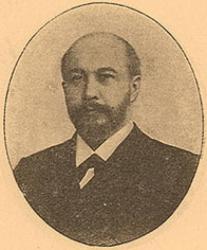
Anaximander
 Greece
- Anaximander: The Greek Philosopher of Infinity
- Early Life and Influences
- The Apeiron: The Principle of Infinity
- The Emergence of the Universe
- Celestial Observations and Inventions
- Influence and Legacy
Anaximander: The Greek Philosopher of Infinity
Anaximander, a renowned ancient Greek natural philosopher, geographer, and pre-Socratic philosopher, lived from approximately 610 to after 547 BCE. He was a pupil of Thales and the author of the first known philosophical treatise in Greek, titled "On Nature."
Early Life and Influences
Anaximander was born in Miletus, a Greek city on the coast of Ionia, in 611 BCE. As an Ionian natural philosopher, he shared a common interest in understanding the origins and fundamental principles of the universe. However, unlike his contemporaries who attributed the world's origins to physical elements such as water or air, Anaximander proposed a more abstract notion.
The Apeiron: The Principle of Infinity
Anaximander's primary philosophical contribution was his concept of the Apeiron, an unbounded and infinite substance that serves as the source of all existence. According to his theory, the Apeiron undergoes constant motion, giving rise to primary opposites such as hot and cold, dry and wet. These opposites interact and separate, eventually forming the material world we experience.
The Emergence of the Universe
From the Apeiron, the world emerges through a process of separation and differentiation. Heat, cold, dryness, and moisture combine to create the cylindrical Earth, with a diameter three times its height. The Earth occupies the center of the universe, surrounded by celestial bodies.
Celestial Observations and Inventions
Anaximander was also a skilled astronomer and cartographer. He conceived of the Sun as a hollow cylinder 28 times the size of Earth, with its fiery core pouring out through an opening. He proposed a similar cylindrical model for the Moon, explaining its phases as it passes through a tilted position. He invented the sundial and may have been the first to recognize the obliquity of the ecliptic.
Influence and Legacy
Anaximander's ideas had a profound impact on subsequent philosophical thought. His concept of the Apeiron challenged traditional materialistic explanations of the world and paved the way for more abstract and metaphysical inquiries. His astronomical and geographical observations contributed to the development of scientific knowledge in ancient Greece. Anaximander's legacy continues to inspire philosophers, scientists, and anyone seeking to understand the origins and nature of the universe.