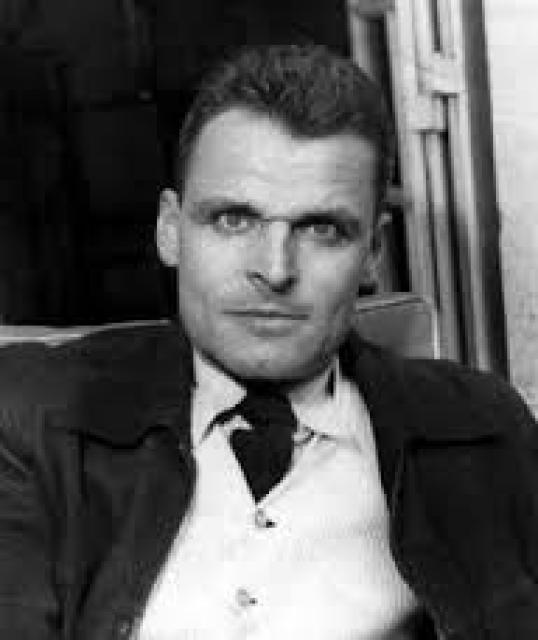
Andre Cayatte
 France
- Andre Cayatte, French Film Director
- Literary and Journalistic Beginnings
- Debut as a Film Director
- Controversial Collaborations
- Post-War Cinema and "Idee Cinema"
- Commitment to Social Justice
- Controversy over the Seznec Case
- International Recognition and Legacy
Andre Cayatte, French Film Director
Early Life and EducationAndre Cayatte, born in 1909, displayed a keen interest in literature from an early age, publishing short stories at just seventeen. He pursued higher education in Pedagogy and Law, earning a law degree with the intention of becoming a lawyer. However, his passion for literature ultimately led him to a career in filmmaking.
Literary and Journalistic Beginnings
Cayatte's literary career began with a 1927 collection of poetry. He subsequently authored several novels and screenplays, which were adapted into films such as "Entrée des Artistes" (1938) and "Remorques" (1939). His work as a screenwriter extended to revising and editing dialogue for other productions.
Debut as a Film Director
In 1942, Cayatte made his directorial debut with "La Fausse Maitresse," an adaptation of Balzac's novel set in contemporary times. He considered directing merely one aspect of his cinematic contributions, viewing himself primarily as an "author," expressing his ideas through the camera as a writer would with a pen.
Controversial Collaborations
During World War II and the German occupation, Cayatte directed several films that resulted in accusations of collaborationism by members of the French Resistance. His involvement with these productions led to a professional ban.
Post-War Cinema and "Idee Cinema"
After the war, Cayatte's film "Les Amants de Vérone" (1949) transposed Shakespeare's "Romeo and Juliet" into a modern setting, addressing post-war social and political issues. This work, along with subsequent films, established Cayatte as a proponent of "idee cinema," which explored complex moral, social, and political themes, often in the context of legal and detective narratives.
Commitment to Social Justice
Cayatte's films often tackled pressing social issues. "Justice est Faite!" (1950) raised questions about wrongful convictions and judicial error, while "Nous sommes tous des Assassins" (1952) examined punishment and the death penalty. Cayatte declared his deep commitment to solidarity and social responsibility, extending his concerns to global issues such as racial discrimination and poverty.
Controversy over the Seznec Case
Cayatte's attempt to produce a film about the Seznec case, in which a man was wrongfully convicted of murder, was met with resistance from the French Ministry of Justice. Despite offers from foreign countries to support the project, Cayatte refused, determined to produce the film in France to aid in the rehabilitation of its justice system.
International Recognition and Legacy
Cayatte's work garnered numerous awards and accolades, including Golden Lions at the Venice Film Festival (1950, 1960), Golden Bears at the Berlin Film Festival (1951, 1973), and special prizes at the Cannes Film Festival (1952, 1954). His films continue to be celebrated for their thought-provoking themes, pioneering spirit, and unwavering commitment to social justice.


