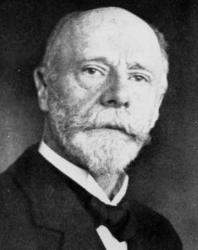
Andre Frederic Cournand
 USA
USA- Biography of Andre Frederic Cournand
- Career in the United States
- Advancements in Cardiac Catheterization
- Nobel Prize and Later Career
- Contributions and Recognition
- Works
Biography of Andre Frederic Cournand
Early Life and EducationAndre Frederic Cournand was born in a family of dentists. He received his primary education at the Condorcet Lyceum. In 1913, he obtained a bachelor's degree in arts from the University of Paris. He continued his education at the Faculty of Natural Sciences and obtained diplomas in physics, chemistry, and biology a year later. In 1914, he enrolled in medical school, but his studies were interrupted by World War I. From 1915 to 1918, he served as a medical orderly in an infantry regiment and later as a battalion surgeon. He was awarded the Military Cross with three bronze stars for his bravery and heroism. After the war, he resumed his studies at the University of Paris while working as an intern in one of the Parisian hospitals. There, he gained valuable experience under the guidance of renowned doctors in various fields.
Career in the United States
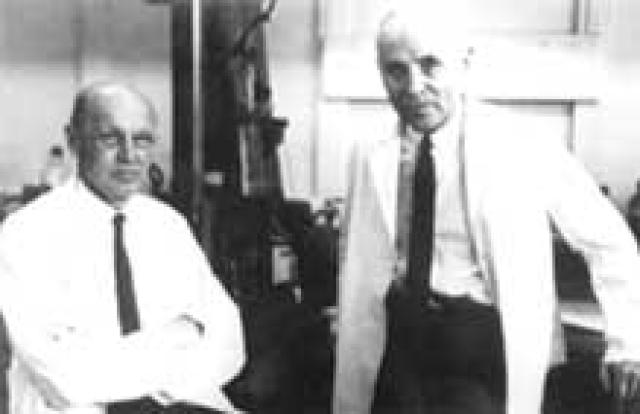
Desiring to study and work in the United States, Cournand obtained permission to work at the Tuberculosis Service of Bellevue Hospital, Columbia University, under the leadership of Professor James Alexander Miller and Jay Burns Amberson. He soon became a permanent staff member and conducted research on the physiology and pathophysiology of respiratory diseases under the guidance of D.V. Richards. He decided to stay in the United States and obtained citizenship in 1941. Cournand and Richards collaborated for nearly a quarter of a century, focusing on the development of cardiac catheterization methods.
Advancements in Cardiac Catheterization
In the late 1920s, early attempts were made to develop methods for monitoring the condition of the heart in various diseases. Cournand and Richards aimed to expand on these methods, and by 1936, they successfully performed cardiac catheterization on dogs and chimpanzees. Their initial catheters were made of fabric soaked in plastic and filled with physiological solution. One end was inserted into a vein, while the other was attached to a manometer to measure blood pressure. In 1941, Cournand conducted the first cardiac catheterization in humans and discovered that the catheter could remain in the circulatory system for up to 7 hours without clinical complications. This breakthrough allowed them to measure blood pressure in blood vessels and cardiac chambers, as well as the total oxygen consumption during respiration. By the late 1940s, cardiac catheterization became a standard research method in many medical centers.
Nobel Prize and Later Career
During World War II, Cournand and Richards received a commission from the United States government's Department of Scientific Research to study shock and develop methods for its treatment. They also conducted research for the Chemical Corps. After the war, in 1946, Cournand became an assistant professor of medicine at the College of Physicians and Surgeons, Columbia University, and in 1951, he was appointed as a full professor. Throughout his career, he continued to refine the cardiac catheterization method. He successfully introduced a catheter through the right atrium and ventricle into the pulmonary artery, measuring the pressure in the artery. From the data obtained, he concluded that the increase in blood pressure resulted from a reaction of the small arterial blood vessels of the pulmonary circulation to a decrease in oxygen levels. In 1956, together with Richards and Forssmann, he was awarded the Nobel Prize in Physiology or Medicine for their discoveries related to cardiac catheterization and pathological changes in the circulatory system.
Contributions and Recognition
Cournand actively collaborated with numerous scientific and medical journals throughout his life. From 1956 to 1959, he served as the Head of the Department of Cardiovascular Research at the National Heart Institute. He was a member of the American Physiological Society, the American Medical Association, the American Clinical and Climatological Association, the American Association for Thoracic Surgery, and a member of the National Academy of Sciences of the United States. He was an honorary member of the National Medical Academy in Paris and the Royal Medical Academy. He served as the President of the Harvey Society from 1960 to 1961. Cournand received several awards and honors, including the Albert Retzius Silver Medal from the Swedish Medical Society in 1946, the Lasker Award from the Association of National Health in 1949, the John Phillips Honorary Award from the American College of Physicians in 1952, and the Gold Medal from the Royal Academy of Medicine in Belgium and the National Medical Academy in Paris in 1956. He was also granted honorary doctorates from universities in Strasbourg, Lyon, Brussels, Pisa, and Birmingham.
Works
Cournand published several notable works, including "Catheterization of the Right Auric in Man" (1941) and "Pulmonary Circulation: Historical Background and Present Day Status of Knowledge in Man" (1959).