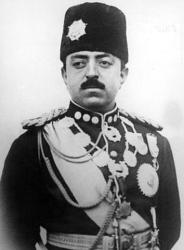
Andre Marty
 France
- André Marty: A French Communist Revolutionary
- Black Sea Mutiny and Imprisonment
- Entry into Politics
- Comintern Involvement
- Spanish Civil War and International Brigade
- World War II and Return to France
- Attempted Revolution and Fall from Grace
- The Marty-Tillon Affair and Expulsion
- Later Years and Death
André Marty: A French Communist Revolutionary
Early Life and Naval CareerAndré Marty, born in Perpignan to a wine merchant, initially pursued a career in the French Navy, becoming a ship mechanic aboard the cruiser Jean Bart. In April 1919, the Jean Bart and the dreadnought France were dispatched to the Black Sea to support the White Army in the Russian Civil War.
Black Sea Mutiny and Imprisonment
On April 19, 1919, André Marty led a rebellion against the French squadron, which led to his arrest, trial, and sentencing to 20 years in prison with hard labor. He was pardoned in July 1923.
Entry into Politics
Upon his release from prison, Marty joined the French Communist Party. In 1924, he was elected to the French National Assembly as a representative for the Seine-et-Oise and to the Central Committee of the FCP.
Comintern Involvement
Marty became increasingly active in the Comintern, eventually being elected Secretary in 1936. He played a significant role in the organization's support of communist causes worldwide.
Spanish Civil War and International Brigade
With the outbreak of the Spanish Civil War, Marty was sent to Spain as a Comintern representative. In October, he was appointed political commissar of the International Brigades. The Franco-Belgian battalion in the XII International Brigade was named in his honor.
World War II and Return to France
When the Spanish Civil War ended in 1939, Marty chose to remain in the Soviet Union, continuing his work for the Comintern. After the beginning of World War II, he made his way to Algiers following the successful Morocco-Algeria operation. He represented the FCP in negotiations with De Gaulle's Free French movement.
Attempted Revolution and Fall from Grace
After the liberation of Paris in August 1944, Marty returned to France, attempting to seize power during the post-war chaos. However, he failed to garner support from other FCP leaders, and Stalin personally vetoed his plan. Despite his re-election to the National Assembly, Marty's influence within the FCP was diminished by public attacks.
The Marty-Tillon Affair and Expulsion
Etienne Fajon's accusations of police espionage against Marty and his former Black Sea comrade, Charles Tillon, culminated in the Marty-Tillon Affair. Following a lengthy trial, Marty was expelled from the FCP on December 7, 1952.
Later Years and Death
Marty remained a deputy until 1955, when he retired and settled in a village near Toulouse. He passed away from lung cancer on November 23, 1956.