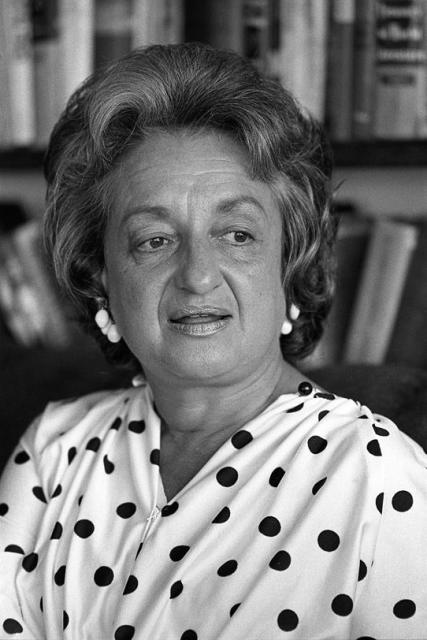
Betty Friedan
 USA
USA- Biography of Betty Friedan
- Early Life and Education
- Marriage and Writing Career
- Leadership in Feminist Movement
- Views on Feminism and Lesbian Rights
- Post-Feminism and Legacy
Biography of Betty Friedan
Betty Naomi Goldstein (February 4, 1921 - February 4, 2006) was born in Peoria, Illinois to Harry and Miriam Goldstein. Harry owned a jewelry store, but when he fell seriously ill, Miriam had to work. She found a job at a newspaper, writing a society column, and this new life outside the home appealed to Betty's mother.

Early Life and Education
During her youth, Betty spent a lot of time in Marxist and Jewish circles. She later wrote that at times she felt isolated from society and felt "outrage at the emerging anti-Semitism" boiling inside her. While attending high school in Peoria, Betty began writing for the school newspaper. When she was denied a column, she and six of her friends started their own literary journal called "Tide." In their magazine, Betty and her friends expressed their views on family life as opposed to school life.

Marriage and Writing Career
Five years after college, in 1942, Betty Goldstein married Carl Friedan. Despite spending nearly a decade at home, dedicating most of her time to her family, she continued to publish articles in women's magazines.
Leadership in Feminist Movement
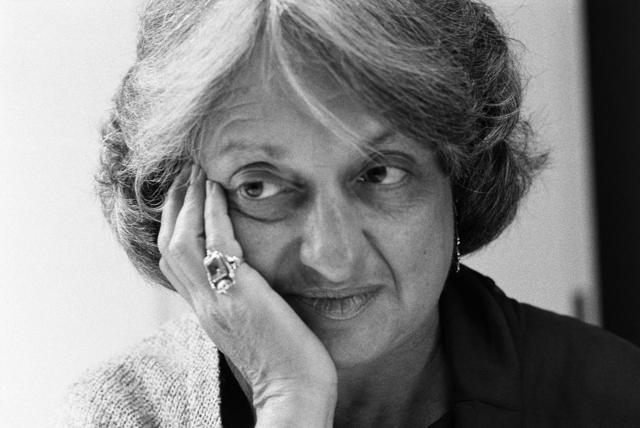
In 1970, with Betty Friedan at the helm, the National Organization for Women (NOW) successfully campaigned against the Supreme Court nomination of G. Harold Carswell. Carswell opposed the 1964 Civil Rights Act, which stated that men and women are equal in obtaining employment.
On August 26, 1970, to commemorate the 50th anniversary of the amendment to the Constitution granting women the right to vote, Friedan organized the national Women's Strike for Equality and led a march in New York City that attracted 50,000 women. To Friedan's delight, the march not only went off without a hitch, but it also spread the women's equality movement on an unprecedented scale among the population.
Views on Feminism and Lesbian Rights
As one of the most influential feminists of the 20th century, Friedan was adamantly against "the analogy between feminism and lesbianism." She later admitted to growing up in a "very conservative" family and not initially accepting homosexuality. However, at the National Women's Conference in 1977, Friedan caused controversy when she insisted on including lesbian rights in the conference's action plan. Her active support for lesbian rights and her statement, "I believe that lesbian women, too, need protection of their civil rights," shocked the public.
Post-Feminism and Legacy
Friedan said, "I want the women's movement to have a reputation that appeals to women all over the world." She urged 20,000 women at the conference to stop the divisions and come together. In 1982, as the second wave of the women's movement was subsiding, Betty wrote the post-feminist book "The Second Stage," which explored the challenges women faced in family life under the pressures of social and legislative factors.
Betty Friedan inspired many followers who wrote about her, her ideas, and women's rights and equality.