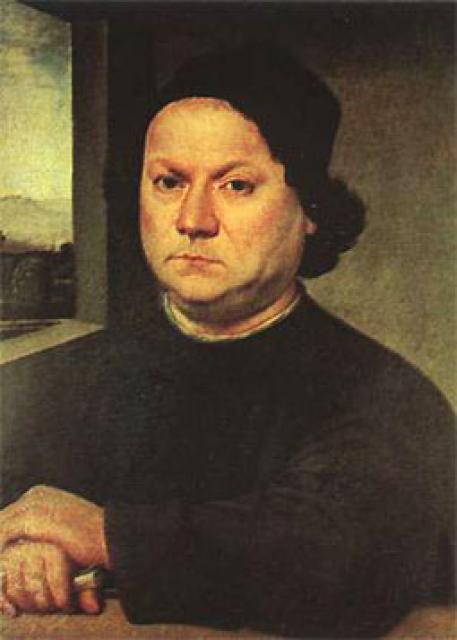
Andrea del Verrocchio
 Italy
Italy- Early Life and Education
- Transition to Sculpture
- Prolific Sculpture and Painting
- Influence on Leonardo da Vinci
- Versatility and Accomplishments
- Legacy and Impact
- Later Years and Death
Early Life and Education
Andrea del Verrocchio, an Italian sculptor and painter of the Florentine Renaissance, was born in Florence circa 1435. Verrocchio's early education focused on the sciences, particularly geometry.
Transition to Sculpture
Initially a goldsmith, Verrocchio gradually shifted his focus to sculpture after his successful creation of bronze figurines. He later mastered marble carving, as evidenced by the exquisite "Tomb of the Wife of Lorenzo Tornabuoni" he crafted in 1470.
Prolific Sculpture and Painting
Verrocchio's renown grew with commissions for notable sculptures, including the bronze "David" and the marble "Madonna and Child" for Leonardo Bruni's tomb. He also executed numerous paintings, including the unfinished "Battle of the Naked Men" and altarpieces for religious institutions.
Influence on Leonardo da Vinci
Verrocchio's workshop became a breeding ground for artistic talent, counting Leonardo da Vinci among its apprentices. Leonardo's exceptional skills in painting are said to have prompted Verrocchio to abandon his own painting pursuits out of recognition of his protégé's superiority.
Versatility and Accomplishments
Despite his primary focus on sculpture, Verrocchio exhibited remarkable versatility as an artist. He excelled in both painting and sculpture, often transitioning between mediums to maintain his creative spark.
Legacy and Impact
Andrea del Verrocchio's legacy extends far beyond his own lifetime. His innovative techniques and artistic principles influenced countless artists after him. His renowned pupils, such as Piero Perugino and Leonardo da Vinci, carried his teachings into the next generation, shaping the course of art history.
Later Years and Death
Verrocchio's later years were filled with continued artistic pursuits and recognition. He died in Venice in 1488 at the age of 56, leaving behind an enduring legacy that continues to inspire and captivate art enthusiasts to this day.