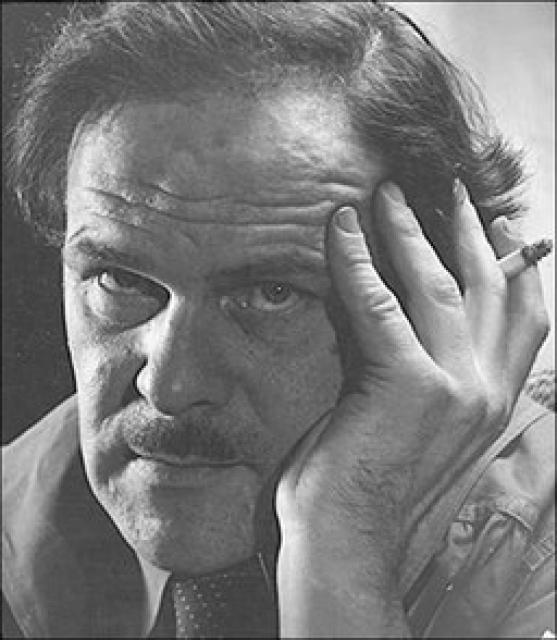
Alexander Arhipenko
- Alexander Archipenko: A Pioneer of Cubism in Sculpture
- Early Life and Education
- Artistic Breakthrough in Paris
- Unique Style and Techniques
- International Recognition
- Legacy and Influence
Alexander Archipenko: A Pioneer of Cubism in Sculpture
Alexander Archipenko (1887-1964) was a renowned Ukrainian-American artist and sculptor, widely recognized as a key figure in the emergence of Cubism in sculpture.
Early Life and Education
Born in Kiev, Ukraine, Archipenko's artistic journey began at the Kiev Art School (1902-1905), where he mastered the traditional techniques of drawing and painting. His involvement in student protests led to his expulsion, but his passion for art remained unwavering. In 1906, he co-organized an exhibition in Kiev showcasing his early works. He then moved to Moscow to continue his studies at the Moscow College of Painting, Architecture, and Sculpture.
Artistic Breakthrough in Paris
Archipenko moved to Paris in 1909, immersing himself in the vibrant art scene. He joined the "La Ruche" artistic community and exhibited alongside avant-garde masters like Pablo Picasso, Georges Braque, and Wassily Kandinsky. His first solo exhibition took place in Hagen, Germany in 1912, solidifying his reputation as an innovative sculptor.
Unique Style and Techniques
Archipenko's sculptures exhibited a distinctive Cubist aesthetic. He experimented with "negative space," incorporating voids and open areas into his works. By manipulating mass, form, and volume, he created sculptures that challenged traditional notions of perspective and balance. His distinct style extended beyond sculpture into drawing, painting, and design.
International Recognition
Archipenko's work gained international attention, with exhibitions in numerous museums across Europe, the United States, and Israel. His impact extended beyond the art world; he designed the Ukrainian pavilion at the 1934 Chicago World's Fair. In 1937, he joined the faculty of the New Bauhaus in Chicago, where he continued to inspire and guide aspiring artists.
Legacy and Influence
Archipenko's groundbreaking contributions to Cubism and modern art left an enduring legacy. His works remain celebrated in major museums worldwide, including 12 drawings housed in the State Hermitage Museum in St. Petersburg, Russia. His influence can be seen in the works of subsequent generations of artists, solidifying his place as a pioneer and visionary in the history of art.


