Andrew Balfour
 Great Britain
- Early Life and Education
- Career in Tropical Medicine
- Notable Contributions
- Health Concerns and Military Service
- Post-War Career and Honors
- Accomplishments and Legacy
- Tragic Demise
Early Life and Education
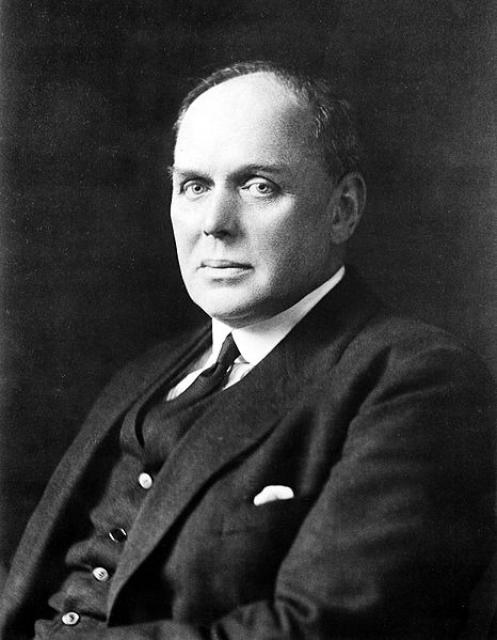
Andrew Balfour, a Scottish physician and specialist in tropical medicine, was born in Edinburgh. He received his early education in college before enrolling at the University of Edinburgh, where he graduated in 1894. He initially practiced medicine with his father but returned to academia within two years, becoming a student at Cambridge. Here, Balfour specialized in preventive medicine, which became his primary focus. His research during this period centered around typhoid fever. He completed his M.D. thesis in 1898, examining the toxicity of dyes and its correlation with river pollution.
Career in Tropical Medicine
In April 1900, Balfour traveled to South Africa as a civilian surgeon during the Second Boer War. While there, he contracted typhoid fever, forcing him to return to England in 1901. During his time in Africa, he became fascinated with the work of Scottish parasitologist Patrick Manson, and pursued studies in tropical medicine.
In September 1902, Balfour married and was appointed Director of the Tropical Research Laboratory in Khartoum. Within two years, he was promoted to Sanitary Adviser to the Sudan Government, giving him access to high-ranking officials.
Notable Contributions
Balfour's work in Sudan was highly successful. By improving the city's water purification and sanitation systems, as well as eliminating mosquito breeding sites, he reduced malaria deaths by 90%. A floating laboratory donated by Dr. Henry Wellcome enabled him to conduct extensive studies in the Upper Nile region, leading to a better understanding of the origins of various blood diseases. Balfour also published several significant papers on spirochetes during this period.
Health Concerns and Military Service
Balfour's health continued to be impacted by his time in Africa, and he returned to Britain in 1913. That same year, he embarked on research expeditions to South America and the West Indies. With the outbreak of World War I, he joined the Royal Army Medical Corps, serving in France, Greece, and Egypt.
Post-War Career and Honors
In 1923, Balfour became Director of the London School of Hygiene and Tropical Medicine, overseeing the construction of a new school. From 1925 to 1927, he served as President of the Royal Society of Tropical Medicine and Hygiene. In 1929, Balfour suffered a nervous breakdown, rumored to have been brought on by the challenges of his new position.
Accomplishments and Legacy
Beyond his medical contributions, Balfour was an avid sportsman, excelling in amateur boxing and rugby. He also had a talent for writing, penning adventure novels set in historical Scotland, often involving medical themes. In 1930, he was knighted as a Knight Commander of the Order of St Michael and St George.
Tragic Demise
Balfour's struggles with depression escalated, leading to his hospitalization. On January 30, 1931, his frozen body was discovered outside the hospital, having apparently fallen from a window. His untimely death cut short a brilliant career dedicated to improving health outcomes in tropical regions.