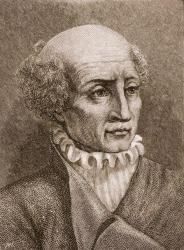
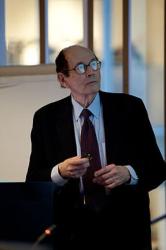
Andrew Viktor Schalley
 USA
USA- Biography of Andrew Victor Schally
- Early Life and Education
- Research and Discoveries
- Career and Major Contributions
- Nobel Prize and Later Career
Biography of Andrew Victor Schally
IntroductionAndrew Victor Schally is a Polish-American endocrinologist and the recipient of the Nobel Prize in Physiology or Medicine in 1977. He was born in Vilnius, Lithuania, in 1926, to parents Kazimierz Peter Schally and Maria Schally (née Dakka), who were both military servicemembers. Schally's early life was greatly influenced by his difficult childhood in Nazi-occupied Eastern Europe during World War II.
Early Life and Education
During the war, Schally's father was conscripted into the Allied forces, and the family moved to Romania to escape the fate of Polish Jews who were being targeted by the Nazis. In 1945, Schally immigrated to Scotland via Italy and France. The following year, he obtained a diploma from Allan Glen's School. From 1946 to 1950, Schally studied biochemistry at the University of London, and for the next two years, he worked as a junior research fellow at the National Institute for Medical Research in London. It was during this time that he gained skills and experience in laboratory research and experimental techniques, sparking his interest in medical science.
Research and Discoveries
In 1952, Schally immigrated to Montreal, Canada, and enrolled at McGill University to study endocrinology under the guidance of D.L. Thomson. He conducted scientific research at the Allen Memorial Institute of Psychiatry's Experimental Therapy Laboratory. Endocrinology is a branch of biology and medicine that studies the structure, functions, and diseases of endocrine glands, including the pituitary gland, thyroid gland, adrenal glands, endocrine components of the pancreas, gonads, and others. These glands produce hormones, biologically active substances that circulate in the blood and regulate the functions of internal organs.
During his first two years in Montreal, Schally studied the adrenal glands and pituitary gland. The pituitary gland produces adrenocorticotropic hormone (ACTH), which, when released into the blood, regulates the synthesis and release of cortisol and cortisone by the adrenal glands – hormones that play a role in the body's response to stress. Together with his colleagues at McGill University, Schally developed an experimental test system called the bioassay, which allowed the evaluation of ACTH secretion by pituitary cells. Shortly after, Schally became interested in new hormones believed to be secreted by the hypothalamus and involved in regulating the secretory activity of the pituitary gland.
The hypothalamus, located at the base of the brain above the pituitary gland, is connected to its anterior lobe by a fine network of portal blood vessels. In the 1930s, English physiologist Geoffrey Harris performed a portal vessel ligation experiment and discovered that pituitary secretion decreased as a result. Harris hypothesized that the activity of the pituitary gland is regulated by chemical substances – hormones – produced by the hypothalamus and transported by the blood. Schally was the first to identify these hypothalamic hormones.
In 1955, Schally established that extracts of hypothalamic tissue, tested using his experimental test system, triggered the release of ACTH from pituitary cells. This was the first direct experimental evidence that the hypothalamus regulates the activity of the pituitary gland. Schally named the hypothalamic hormone he identified corticotropin-releasing factor (CRF). It is now referred to as corticotropin-releasing hormone (CRH). Based on these findings, he defended his doctoral dissertation and received his Ph.D. from McGill University in 1957.
Career and Major Contributions
In the same year, Schally became an assistant professor of physiology at the Baylor College of Medicine in Houston, Texas. Together with Roger Guillemin, he began investigating the chemical structure of CRH. However, the structure of this peptide, consisting of 41 amino acids, proved to be quite complex and was only discovered in 1981.
In 1962, Schally obtained American citizenship and accepted an offer from Joseph Meyer, the head of research at the Veterans Administration Hospital in New Orleans, Louisiana, to become the director of the newly established Laboratory of Endocrinology and Polypeptides. He also became an assistant professor of medicine at the Tulane University School of Medicine, and in 1966, he became a professor of medicine at the university.
Schally and Guillemin faced numerous organizational challenges for many years. To obtain sufficient amounts of hypothalamic tissue for hormone research, they had to process hundreds of thousands of hypothalamic preparations obtained from animals slaughtered in abattoirs. After the animals were slaughtered, the brain and hypothalamic tissue had to be quickly extracted as hypothalamic hormones would degrade otherwise. The hypothalamic tissue was then examined in the laboratory.
In 1966, Schally's group isolated a hypothalamic hormone that stimulates the release of thyrotropin (which, in turn, activates the production of thyroid hormones) from the pituitary gland. Schally named this new hypothalamic hormone thyrotropin-releasing factor (TRF). It is now referred to as thyrotropin-releasing hormone (TRH). Initially, Schally and his team were unable to determine the chemical structure of TRH. However, in 1969, they discovered that TRH was a peptide consisting of three amino acids. In the same year, Guillemin's group in Houston unraveled the structure of TRH. Schally and his Mexican clinical colleagues demonstrated that TRH stimulates the secretion of thyrotropin by the pituitary gland in humans. TRH (TRH) is currently used for the diagnosis and treatment of certain hormone-deficiency disorders.
During the late 1960s, Schally and his colleagues also worked on isolating gonadotropin-releasing hormone (GnRH), a hypothalamic hormone that regulates the secretion of gonadotropins – hormones that stimulate the release of female and male sex hormones from the ovaries and testes, respectively. In 1971, Schally's group established the chemical structure of GnRH. They found that GnRH was a peptide consisting of ten amino acids. Schally and his Mexican colleagues demonstrated that GnRH induces the secretion of gonadotropins by the pituitary gland in humans. Synthetic analogs of GnRH have been developed, some of which stimulate gonadotropin secretion and are used to treat certain forms of infertility, while others inhibit their release and may serve as effective contraceptives. Schally had a particular interest in the clinical applications of GnRH analogs.
Nobel Prize and Later Career
Schally and Guillemin were awarded one-half of the Nobel Prize in Physiology or Medicine in 1977 "for their discoveries concerning the peptide hormone production of the brain." The other half was awarded to Rosalyn Yalow for her work in radioimmunoassay. In his Nobel lecture, Schally stated, "At the beginning of my scientific career, knowledge about the hypothalamic regulation of anterior pituitary functions was just emerging. I was fortunate to work in such a critical period and helped lay a solid foundation for the current concepts."
Schally was married to Margaret Rachel White. After their divorce, he married Ana Maria de Meiros-Campos, a Brazilian endocrinology researcher, in 1974.
He has received numerous awards and honors, including the Charles F. Mickle Prize from the University of Toronto, the International Award from the Gairdner Foundation (1974), the Borden Award for Medical Research from the Association of American Medical Colleges, and the Albert Lasker Award for Basic Medical Research (1975). He is a member of the National Academy of Sciences, the American Society of Biochemists, the American Physiological Society, the American Association for the Advancement of Science, and the Endocrine Society. He holds honorary degrees from universities in Canada and other countries.