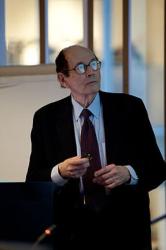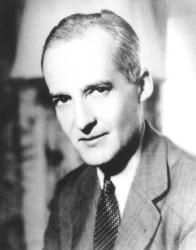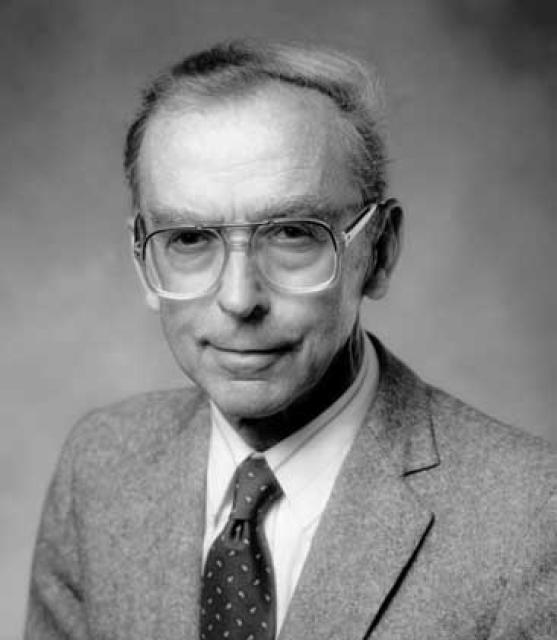
Robert Holley
 USA
USARobert William Holley - Biography
Robert William Holley was an American biochemist and the recipient of the Nobel Prize in Physiology or Medicine in 1968. He developed a strong interest in biology during his youth and received his early education in Illinois, California, and Idaho. After completing high school in 1938, he enrolled at the University of Illinois to study chemistry. Four years later, he obtained a bachelor's degree and transferred to Cornell University to continue his research in organic chemistry. During this time, Holley served as a chemistry assistant and researcher at a medical college for two years.
During World War II, Holley temporarily suspended his studies and joined a group of scientists from the American Office of Scientific Research and Development. This group was responsible for the synthesis of penicillin, the antibiotic discovered by Alexander Fleming in 1928. After the war, Holley was appointed to the National Research Council at Cornell and received his Ph.D. in 1947. A scholarship from the American Chemical Society allowed him to continue his research at Washington State College (now University) in Pullman for two years. In 1948, he returned to Cornell and became an assistant professor of organic chemistry at the New York State Agricultural Experiment Station.
During his years of research, Holley focused on studying the biochemistry of nucleic acids, the substances that control protein formation in organisms. In 1955, he was granted a one-year sabbatical at the California Institute of Technology in Pasadena, where he conducted experiments leading to the determination of the chemical structure of ribonucleic acid (RNA). RNA plays a central role in protein synthesis and carries genetic information from the cell nucleus.
In 1964, Holley was appointed a professor and head of the Department of Biochemistry and Molecular Biology at Cornell University. Three years prior to this, Marshall W. Nirenberg had discovered the basic triplet code for the amino acid phenylalanine. At Cornell, Holley and his colleagues continued Nirenberg's experiments on synthesizing transfer RNA molecules with nucleotide sequences specific to phenylalanine. They determined the nucleotide sequence, which could be compared to deciphering the meaning of a sentence written in a foreign language when it is divided into words and words into letters. The results of these studies were published in the journal "Science" in 1965. Holley and his colleagues also discovered that transfer RNA had a biologically active secondary structure in addition to its primary structure. The secondary structure resembled a three-leaf clover, with the nucleotide sequence in the "middle leaf" complementary to that of messenger RNA. This complementarity between transfer RNA and messenger RNA ensures the proper placement of amino acids in a protein.
Holley shared the 1968 Nobel Prize in Physiology or Medicine with Har Gobind Khorana and Marshall Nirenberg "for their interpretation of the genetic code and its function in protein synthesis." In his presentation speech, Peter Reichard from the Karolinska Institute noted that Holley was one of the first discoverers of a special type of nucleic acid that "can read the genetic code and translate it into a protein alphabet." He added that Holley's research represented the first determination of the complete chemical structure of a biologically active nucleic acid. Decoding the genetic code and understanding its function were major achievements in the rapidly advancing field of molecular biology.
Holley spent 1966 at the Salk Institute for Biological Studies in San Diego, California, thanks to a grant from the National Science Foundation. In 1968, he became a professor of molecular biology at the American Cancer Society and a member of the scientific society at the Salk Institute, continuing his research on the mechanisms of biological cell growth control in mammals. In 1969, he was appointed an adjunct professor at the University of California.
In 1945, Holley married Anne Dworkin, a mathematics teacher, and they had a son together. Holley enjoyed traveling with his family. His numerous awards include the Albert Lasker Award for Basic Medical Research (1965), the U.S. Department of Agriculture's Distinguished Service Award (1965), and the Molecular Biology Award from the Staelite Society of the United States National Academy of Sciences (1967). He was a member of the National Academy of Sciences, the American Association for the Advancement of Science, the American Chemical Society, the American Society of Biochemistry, and the American Academy of Arts and Sciences. Keuka College and the University of Illinois bestowed honorary degrees upon him.