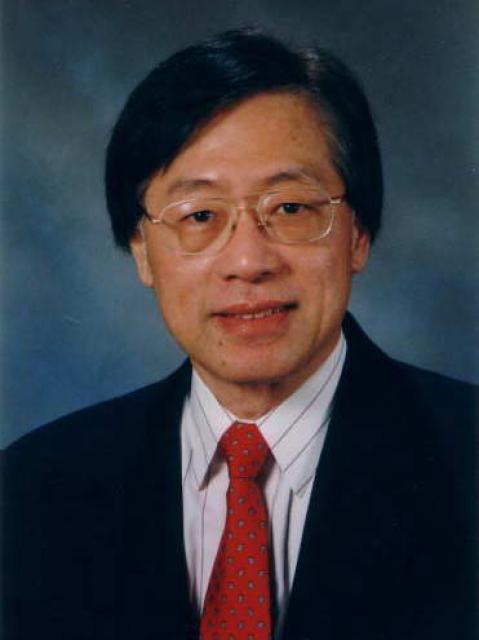
Andrew Yao
 China
China- Biography of Andrew Yao
- Education and Early Career
- Current Work and Affiliations
- Awards and Recognition
Biography of Andrew Yao
Andrew Yao, a scientist in the field of computational systems theory, is a professor at Tsinghua University in Beijing. He was awarded the Knuth Prize in 1996 and the Turing Award in 2000.
Education and Early Career
Yao graduated from National Taiwan University with a bachelor's degree in physics in 1967. He then obtained two doctorate degrees, one in physics from Harvard University in 1972 and another in computer science from the University of Illinois at Urbana-Champaign in 1975.
Yao worked as a researcher at MIT for a year, from 1976 to 1981, and then at Stanford for another year. In 1982, he became a full professor at Stanford and remained there until 1986. He taught at Princeton University until 2004, conducting research on algorithms and computational complexity theory.
Current Work and Affiliations
Since 2004, Yao has been a professor at the Center for Advanced Study at Tsinghua University in Beijing. He has also worked as a visiting scientist at research centers of IBM, DEC, Bell Labs, Xerox, and Microsoft.
Yao is a member of various professional organizations, including the National Academy of Sciences, the American Academy of Arts and Sciences, the American Association for the Advancement of Science, the Association for Computing Machinery, the American Mathematical Society, the IEEE, the National Science Foundation (DIMACS center), and the Society for Industrial and Applied Mathematics.
Awards and Recognition
In 2000, Yao was awarded the prestigious Turing Award for his fundamental contributions to the theory of computation, including complexity-based theory of pseudo-random number generation, cryptography, and communication complexity. He has also received other notable awards, such as the George Polya Prize in 1987, the Knuth Prize in 1996, and the Pan Wen-Yuan Research Award in 2003.


