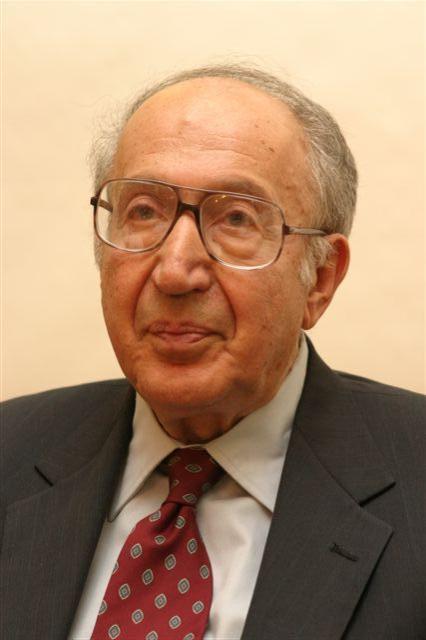
Richard Payps
 USA
USABiography of Richard Pipes
Richard Pipes, an American ideologist, was one of the prominent Western thinkers during the period of the Cold War. Born on July 11, 1923, in the Polish city of Cieszyn, Pipes grew up in an assimilated Jewish family with Polish and German cultural traditions. His father, also named Richard Pipes, was a former Polish legionnaire and businessman. The family fled from Warsaw during the German invasion in 1939, and they eventually settled in the United States in 1940.
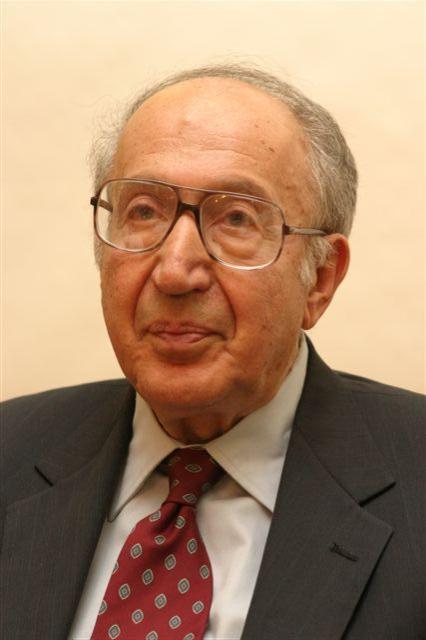
In 1943, Richard Pipes joined the United States Air Force, where he specialized in intelligence and prisoner interrogation. He served as a translator and spent time at the American Air Force base in Poltava, Ukraine, where he honed his Russian language skills. After his military service, Pipes continued his education at Cornell University and Harvard University.

In 1958, Pipes became a professor at Harvard University and focused on Russian history. He went on to become the director of the Harvard Research Center for the USSR in 1968 and the chief consultant for the Stanford Research Institute's Institute for the Study of Russia in 1973. One of the key events in Pipes' political and academic career was his leadership of Team B, an independent review panel tasked with assessing Soviet threats. This team, formed by recommendation of then-CIA Director George Bush, exposed significant underestimations and misinterpretations of Soviet military strategy and economic growth. Their findings highlighted the development of new military technologies, such as acoustic systems on nuclear submarines, which initiated a new phase of arms race.
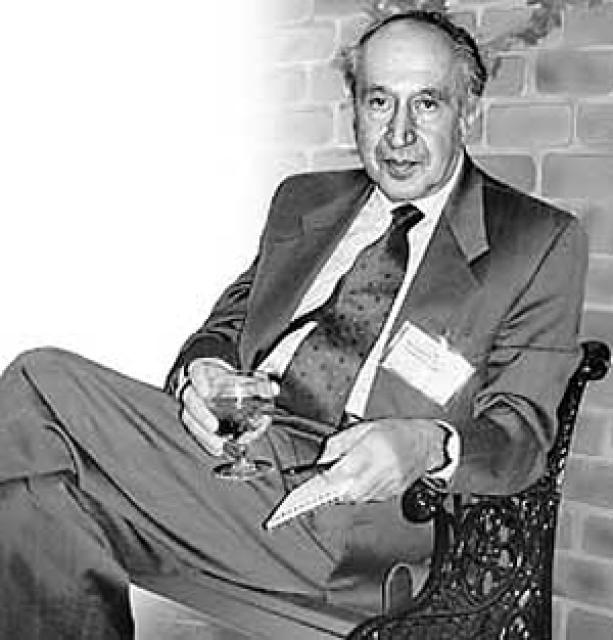
During the 1970s, Pipes served as an advisor to Senator Henry Jackson and later became a member of the National Security Council in 1981 under President Reagan. He strongly opposed the policy of détente and focused on Eastern European and Soviet policies. Pipes played a significant role in the process against the Communist Party of the Soviet Union in 1992, supporting its dissolution and the suspension of its leadership.
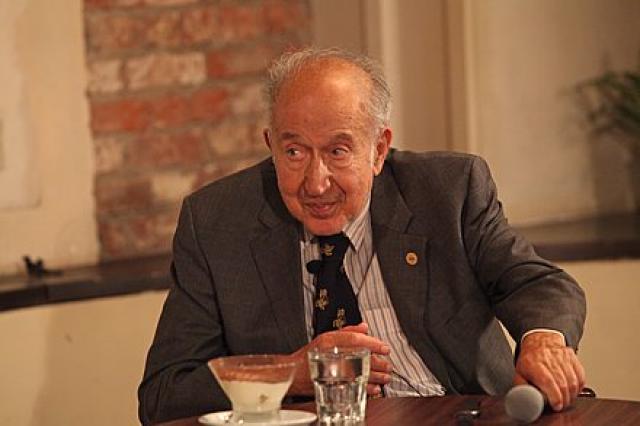
Pipes has authored over thirty works, including "The Russian Revolution," "Russia under the Old Regime," and "Property and Freedom." His historical research and writings primarily focus on Russian and Soviet history, particularly the communist period. Pipes has been recognized as one of the foremost experts in the field.
Richard Pipes continues to collaborate with institutions such as the Victims of Communism Memorial Foundation and the Hudson Institute. Although he now limits his literary activities to article publications due to his age, his insights and expertise are still sought after. Pipes has been involved in various forums and conferences, such as the Valdai Club, Forum Russia, and international conferences at the Higher School of Economics, where he shares his perspectives on current political issues.
Pipes' main argument in his works is that the roots of communism can be traced back to Russia's historical past, particularly its patrimonial structure and the lack of private property rights. He highlights the problems of legal nihilism and expansionism, drawing parallels between the Soviet Union, Germany, and other totalitarian states. Pipes believes that the West's mission is to convince Russians of the value of institutions such as democracy, the rule of law, freedom of speech, multiparty systems, and the respect for private property.



