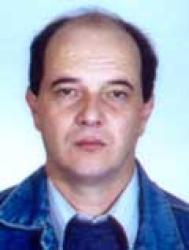
Andrey Belozerskiy
 Uzbekistan
Biography of Andrey Belozersky
Andrey Nikolayevich Belozersky was an outstanding Soviet biologist and biochemist, and one of the founders of molecular biology in the USSR. He was born in Tashkent in a family of a civil servant - his father, Nikolay Andreyevich Belozersky, was a lawyer of the judicial chamber, and his mother was a teacher at a preparatory school. After the death of his parents in 1913, Andrey Belozersky ended up in the Gatchina orphanage, but after its closure in the spring of 1917, he moved to live with his aunt - his mother's sister in the city of Verny. At the age of 16 in 1921, he entered the Faculty of Physics and Mathematics at the Central Asian State University (SAU) in Tashkent. Since 1925, he taught at the university's vocational faculty. At the university in Tashkent, under the guidance of the well-known biologist A. V. Blagoveshchensky, he completed his first scientific work - on the concentration of hydrogen ions in water extracts from leaves of certain mountain plants. After completing his graduate studies at SAU in 1930, Andrey Nikolaevich Belozersky was invited to work at Moscow State University in the newly established department of plant biochemistry. In 1938, he was awarded the scientific degree of Candidate of Sciences without defending a dissertation, and in 1943, he defended his doctoral dissertation.
Contributions to Science
Andrey Nikolayevich was married twice. He died in Moscow and was buried at the Novodevichy Cemetery. A.N. Belozersky first discovered DNA in peas, and later in other plants and bacteria, which confirmed the hypothesis of the universal nature of DNA as a component of all living things. In 1957, he and his colleague were the first to propose the hypothesis that living cells contain small amounts of RNA, the composition of which corresponds to DNA, thus being the first to recognize the informational role of RNA, which was soon confirmed by experiments by foreign colleagues. Belozersky and his students conducted a number of other important studies. He actively participated in the creation of modern genosystematics (DNA systematics, DNA taxonomy).
Establishment of Institutes and Awards
Andrey Nikolayevich Belozersky founded the Antibiotics Laboratory (later the Microorganism Biochemistry Laboratory) at the A.N. Bach Institute of Biochemistry of the USSR Academy of Sciences (1946), the Virology Department at the Biology and Soil Faculty of Moscow State University (1964), and the Problem Interfaculty Laboratory of Bioorganic Chemistry at Moscow State University (1965), which in 1991 became the A.N. Belozersky Institute of Physical and Chemical Biology. He was also one of the founders of the Institute of Protein of the USSR Academy of Sciences in Pushchino (1968). Andrey Nikolayevich Belozersky was awarded the title Hero of Socialist Labor (1969), and was a three-time recipient of the Order of Lenin (1961, 1965, 1969) and the Order of the Red Banner of Labor (1951).