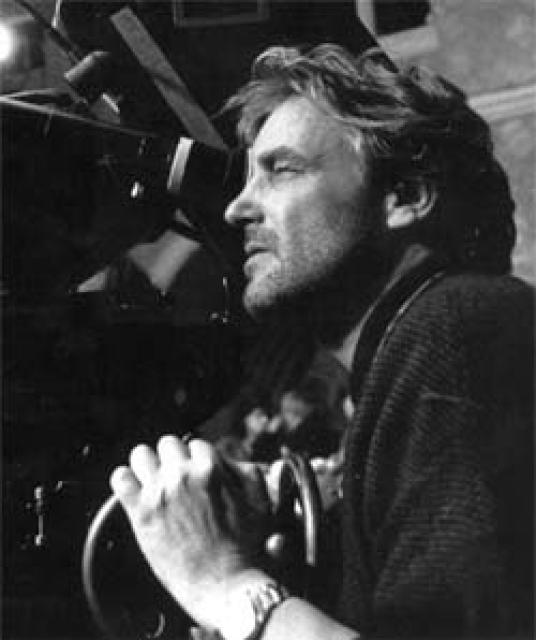
Andrzej Zulawski
 Poland
- Andrzej Żuławski: A Polish Master of Cinema
- Return to Poland and Early Success
- A French Interlude
- Triump in France
- A Return to Historical Themes
- Legacy and Impact
Andrzej Żuławski: A Polish Master of Cinema
Born in Lwów, Ukraine, to a family with a literary legacy, Andrzej Żuławski inherited a passion for storytelling. He studied philosophy in Warsaw before pursuing filmmaking at IDHEC in Paris.
Return to Poland and Early Success
Upon returning to Poland, Żuławski worked as an assistant director for Andrzej Wajda before making his feature debut with "The Third Part of the Night" in 1971. His follow-up, "The Devil" (1972), faced censorship, leading to its ban until 1988.
A French Interlude
Undeterred by censorship, Żuławski found success in France with "The Important Thing Is to Love" (1974), starring Romy Schneider in an unforgettable role. He returned to Poland to begin shooting the science fiction film "On the Silver Globe," based on his grandfather's novel. However, conflicts with film authorities forced him to abandon the project.
Triump in France
Returning to France, Żuławski created acclaimed works such as "Possession" (1981) with Isabelle Adjani, "A Woman in Flames" (1984) with Valérie Kaprisky, and "Mad Love" (1985) with Sophie Marceau, who became his wife.
A Return to Historical Themes
In later years, Żuławski explored historical subjects, including a film adaptation of Mussorgsky's "Boris Godunov" (1989) and "The Blue Note" (1991), a tale of the relationship between George Sand, her daughter, and Frédéric Chopin.
Legacy and Impact
Andrzej Żuławski left an enduring legacy in cinema. Known for his uncompromising and often controversial films, he pushed the boundaries of filmmaking and explored themes of love, sexuality, and the human condition with unflinching intensity. His work continues to inspire and challenge audiences worldwide.


