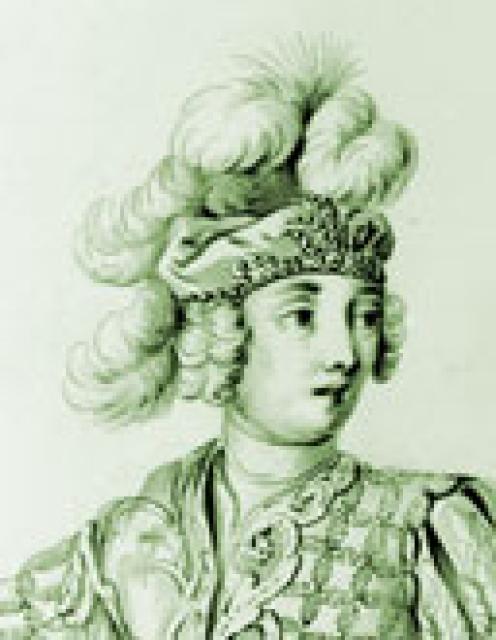
Angelo Maria Amorevoli
 Germany
Biography of Angelo Maria Amorevoni
Angelo Maria Amorevoni was a leading Italian operatic tenor of the Baroque era. He is considered one of the greatest tenors on the European opera scene in the first half of the 19th century, alongside Annibale Pio Fabri and Francesco Borosini.
Early Life and Career
Amorevoni was born on September 16, 1716, in Venice, Italy. He made his debut on stage at the age of 13, performing in the opera seria genre. In 1729, he sang in the revivals of Flavio Carlo Lanciani's "Amore e gratitudine" and Antonio Vivaldi's "Ottone in villa." The following year, Amorevoni appeared in operas by Nicola Porpora and Johann Adolph Hasse in Rome and Vienna, respectively. From 1731 to 1735, he participated in major opera productions in Turin, Milan, and other cities in northern Italy. In Naples, between 1736 and 1740, Amorevoni performed in eleven premieres, including Domenico Natale Sarro's "Achille in Sciro," which premiered on November 4, 1737, at the San Carlo Theater. In 1739, he traveled to Vienna, where he gained attention for his interpretation of Vivaldi's "Feraspe."
Later Career
On December 26, 1749, Amorevoni participated in the grand opening of the new Teatro Regio in Turin, performing the role of Mitrane in Francesco Feo's opera "Arsace." In 1741, he made his debuts in Florence and London, where he appeared in several productions at the King's Theatre between October 1741 and May 1743.
Amorevoni returned to Italy in 1744-1745, performing in Milan. He then decided to move to Dresden to have the opportunity to sing in Johann Adolph Hasse's operas. Hasse granted his request and gave Amorevoni the leading role in the opera "Solimano," which premiered in 1753. In 1748, Amorevoni visited Vienna again, where he met the renowned librettist and poet Pietro Metastasio, who highly praised his vocal abilities. He also took part in the third opening ceremony of the Burgtheater, performing an excerpt from Christoph Willibald Gluck's opera "La Semiramide Riconosciuta."
Amorevoni lived in Milan from 1748 to 1749 and again from 1759 to 1764 before deciding to retire from the stage. He returned to Dresden, where he was engaged as a chamber and church singer at the Saxon Court until approximately 1771. He passed away on November 15, 1798, in Dresden.
Legacy
Amorevoni is regarded as one of the greatest tenors on the European opera scene in the first half of the 19th century. His arrival marked a significant change in the roles tenors were allowed to portray, as they were previously limited to playing supporting characters and comedic roles. With his exceptional coloratura virtuosity, Amorevoni paved the way for tenors to take on leading roles in Baroque operas. These roles included fathers, commanders, and antagonistic villains, which were traditionally played by baritones.
Throughout his career, Amorevoni collaborated extensively with Johann Adolph Hasse, concluding their partnership with the allegro segesta "Solcar pensa un mar sicuro" from "Arminio" in 1745. This excerpt was a true whirlwind, representing the most acrobatic coloratura aria of its time, which only a male singer could perform.


