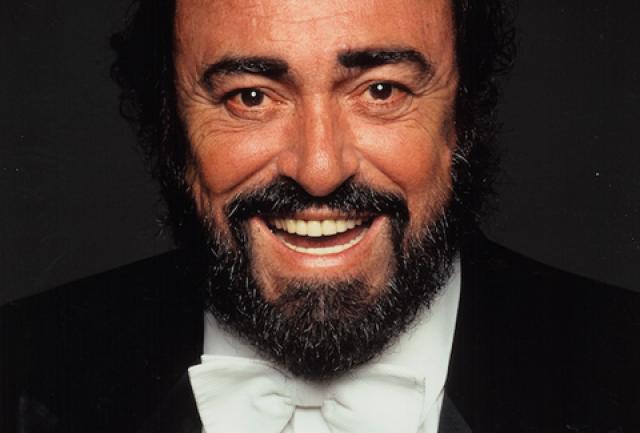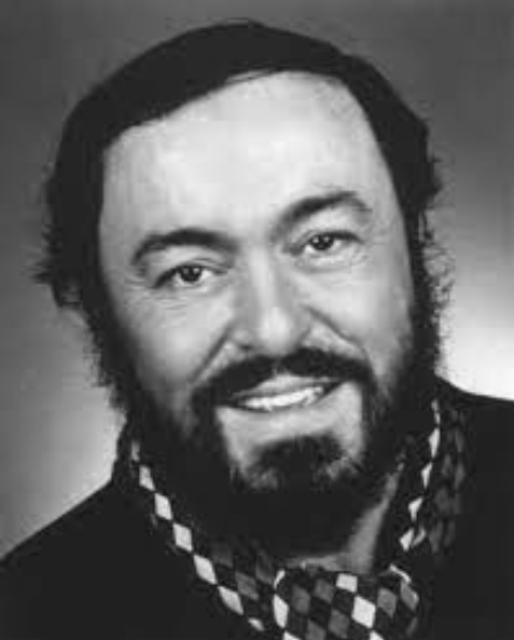
Luciano Pavarotti
 Italy
ItalyBiography of Luciano Pavarotti
Early Life and EducationLuciano Pavarotti was born on October 12, 1935, in Modena, Italy. His father, Fernando Pavarotti, worked as a baker but had a passion for singing. However, he never pursued a professional singing career due to stage fright. Luciano's mother, Adelina Venturi, worked at a tobacco factory. In 1943, when the fascists arrived in their city, the family moved to a countryside farm where they became involved in agriculture. From a young age, Luciano showed an interest in music and began giving concerts for neighbors and relatives at the age of 4. He later joined his father in the church choir and regularly listened to opera records from his father's collection. At the age of 12, Luciano attended his first opera, where he heard the tenor Benjamin Gigli perform. While attending Schola Magistrale school, Luciano took vocal lessons from Professor Dondi and his wife. Besides singing, Luciano also played football and even considered a career as a goalkeeper. However, after receiving his high school diploma, his mother convinced him to pursue a career in teaching.
Music Career
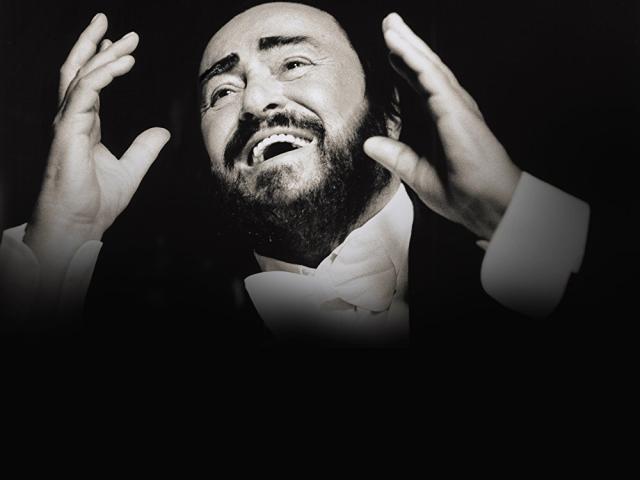
After obtaining his professional education, Luciano Pavarotti worked as a primary school teacher for two years. During this time, he began taking lessons from Arrigo Pola and Ettore Campogalliani. After making the decision to pursue a vocal career, Pavarotti left his teaching job. In 1960, he suffered from a professional illness, vocal cord thickening, which caused him to lose his voice. However, a year later, the thickening disappeared, and Pavarotti's voice gained new richness and depth. In 1961, Pavarotti won the International vocal competition, sharing the first prize with Dmitry Nabalov. They were both given roles in Puccini's opera "La Boheme" at the Reggio Emilia Theater. In 1963, Pavarotti made his debut at the Vienna State Opera and the Royal Opera House in London's Covent Garden. His breakthrough came with the role of Tonio in Donizetti's "La Fille du Regiment," in which he performed at the Royal Opera House, La Scala, and the Metropolitan Opera. Pavarotti's record-breaking performance included singing 9 high "C"s in a row with ease. This sensational performance changed Pavarotti's career forever. He signed a contract with impresario Herbert Breslin, who promoted him in the world's finest theaters. From 1972, in addition to stage performances, Pavarotti also began touring with solo concerts, which included classical opera arias, Italian songs, and encores. Apart from the roles of lyric tenor Elvino in "La Sonnambula" and Arturo in "I Puritani" by Bellini, Edgardo in "Lucia di Lammermoor" by Donizetti, Alfredo in "La Traviata," and the Duke of Mantua in "Rigoletto" by Verdi, Luciano Pavarotti also mastered dramatic roles such as Riccardo in Verdi's "Un Ballo in Maschera," Cavaradossi in Puccini's "Tosca," Manrico in Verdi's "Il Trovatore," and Radames in Verdi's "Aida." Pavarotti often appeared on television performances, participated in the "Arena di Verona" festival, and recorded famous opera arias and popular songs such as "Nessun Dorma," "O Sole Mio," and "Caruso" in memory of legendary tenor Enrico Caruso. In the early 1980s, Luciano Pavarotti founded the international vocal competition "The Pavarotti International Voice Competition." Over the years, he toured with the competition winners in America and China, performing excerpts from operas such as "La Boheme," "L'Elisir d'Amore," and "Un Ballo in Maschera." In addition to his concert activities, Pavarotti collaborated with the Vienna State Opera and La Scala. His performances in Verdi's "Aida" were always accompanied by lengthy ovations and multiple curtain calls. However, there were also setbacks in his career. In 1992, during the performance of "Don Carlo" by Franco Zeffirelli at La Scala, Pavarotti was booed by the audience. The tenor admitted his own shortcomings and never performed at La Scala again. Another breakthrough in Pavarotti's international recognition occurred in 1990 when the BBC used the aria "Nessun Dorma" performed by Pavarotti, Placido Domingo, and Jose Carreras as the theme song for the broadcast of the World Cup. The video for the song was shot in the Roman Baths of Caracalla. The album became the best-selling recording in the history of music, as documented in the Guinness Book of Records. The "Three Tenors" project was so successful that the singers performed at the opening ceremonies of the subsequent three World Cups.
Popularizing Opera
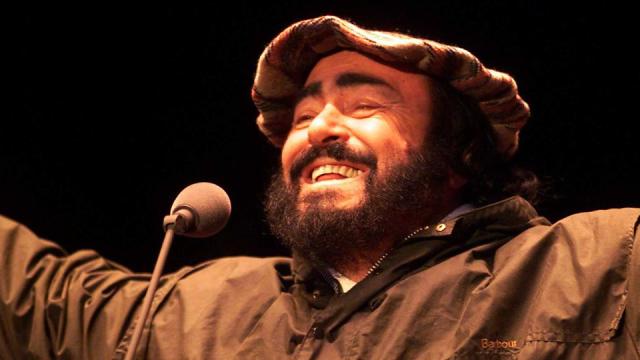
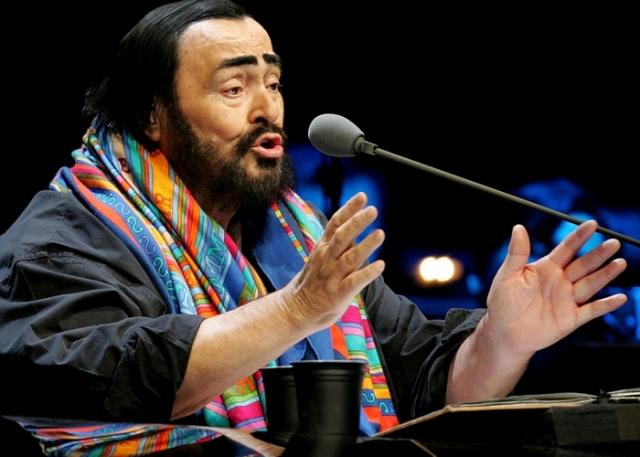
Luciano Pavarotti became a popularizer of opera. His solo concerts gathered up to half a million spectators who came to listen to the tenor live in Central Park in New York, Hyde Park in London, and the Champ de Mars in Paris. In 1992, Pavarotti created the "Pavarotti and Friends" program, which featured not only opera singers but also pop stars such as Elton John, Sting, Bryan Adams, Andrea Bocelli, Lionel Richie, James Brown, Celine Dion, and Sheryl Crow. In 1998, Luciano Pavarotti received the "Grammy Legend" award.
Personal Life
While still in school, Luciano met his future wife, Adua Veroni, who was also interested in singing. Together with Luciano, she went to work as a teacher in a rural school. The couple got married in 1961, as soon as Pavarotti started earning a living on the opera stage. They had three daughters: Lorenza in 1962, Cristina in 1964, and Giuliana in 1967. The marriage with Adua lasted for 40 years, but Pavarotti's continuous infidelities led his wife to file for divorce. During his musical career, Pavarotti had relationships with many female singers. One of the best-known romances of the 1980s was with his student, Madelyn Renee. However, at the age of 60, the tenor met a young woman who gave him a second chance at love. Her name was Nicoletta Mantovani, and she was 36 years younger than Pavarotti. In 2000, after his divorce from his first wife, Pavarotti proposed to Nicoletta and built a spacious mansion for their new family. In 2003, the couple welcomed twins, a son named Riccardo and a daughter named Alice, but unfortunately, the newborn boy passed away shortly after. Pavarotti devoted all his energy to raising their young daughter.
Death
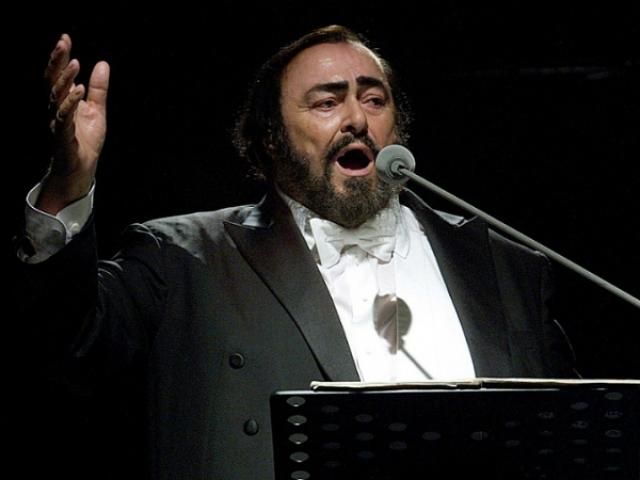
In 2004, Luciano Pavarotti received a devastating diagnosis of pancreatic cancer. After weighing all his options, the artist decided to embark on a final farewell tour to 40 cities around the world. In 2005, the album "The Best" was released, featuring Pavarotti's best-ever performances. The tenor's final performance took place on February 10, 2006, at the Turin Olympics, after which Pavarotti was hospitalized for surgery to remove the cancerous growth. His condition improved, but in August 2007, Pavarotti contracted pneumonia. Upon returning home to Modena, the artist passed away on September 6, 2007. Pavarotti's death deeply affected his fans, and for three days, people lined up around the clock to pay their respects to the legendary tenor.
Discography
- The Essential Pavarotti - 1990
- Pavarotti & Friends - 1992
- Dein ist mein ganzes Herz - 1994
- Pavarotti & Friends 2 - 1995
- The Three Tenors: Paris - 1998
- Christmas with Pavarotti - 1999
- The Three Tenors Christmas - 2000
- Donizetti Arias - 2001
- Neapolitan and Italian Popular Songs - 2001