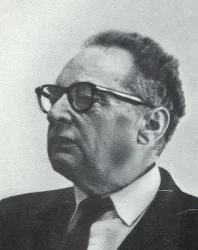
Anna Akhmatova
Anna Akhmatova became one of the defining voices of Russian poetry, combining the intimacy of a whispered confession with the force of a public witness. Her life crossed the Russian Empire, revolution, war, and Soviet repression, and her poems gave lasting form to both private grief and national trauma.
Early life and first acclaim
Born Anna Andreyevna Gorenko near Odesa on June 23, 1889, she grew up largely at Tsarskoye Selo, outside St. Petersburg. She began writing poetry as a child. Her father disapproved of a literary career, so she adopted the name Akhmatova, drawn from her family ancestry, as her pen name.
In 1910 she married fellow poet Nikolay Gumilyov. Their son, Lev, was born in 1912, the year Akhmatova published her first collection, *Evening*. The precise, musical love poems in *Rosary* (1914) brought her broad recognition. She was associated with Acmeism, a movement that favored concrete images and clarity over the symbolism then dominant in Russian letters. Her marriage to Gumilyov ended in 1918; he was executed in 1921 after the Bolshevik Revolution.
Poetry under pressure
Akhmatova stayed in Russia as political life tightened around its writers. From the late 1920s, censorship and official pressure sharply curtailed her publication. Her son was arrested in 1935 and again in 1938, and spent years in labor camps. Akhmatova joined the families waiting outside prisons in Leningrad, hoping for news or permission to send a message.
Those years shaped *Requiem*, a cycle composed largely between 1935 and 1940. Because keeping the poem on paper could endanger her and her friends, she memorized it and shared it orally with a small circle. It first appeared abroad in 1963; publication in the Soviet Union came decades later. The work speaks both for a mother’s anguish and for the many people caught in the purges.
Official condemnation followed in 1946, when a party resolution attacked Akhmatova and writer Mikhail Zoshchenko and she was expelled from the Writers’ Union. She was readmitted in 1951. During the Second World War she was evacuated to Tashkent, returning to Leningrad in 1944. Her other major late work, *Poem Without a Hero*, grew over many years into a layered meditation on memory, history, and the vanished world before the Revolution.
Legacy
After Stalin’s death, Akhmatova’s standing gradually recovered. She received international recognition, including an honorary degree from Oxford in 1965. She died near Moscow on March 5, 1966. Her restrained lyric poems and monumental witness of *Requiem* remain central to Russian literature and to the record of life under state terror.