
Anna Boch
 Belgium
- Biography of Anna Boch
- Early Life and Influences
- Connection with Vincent van Gogh
- Reasons for Selling the Paintings
- Later Life and Legacy
Biography of Anna Boch
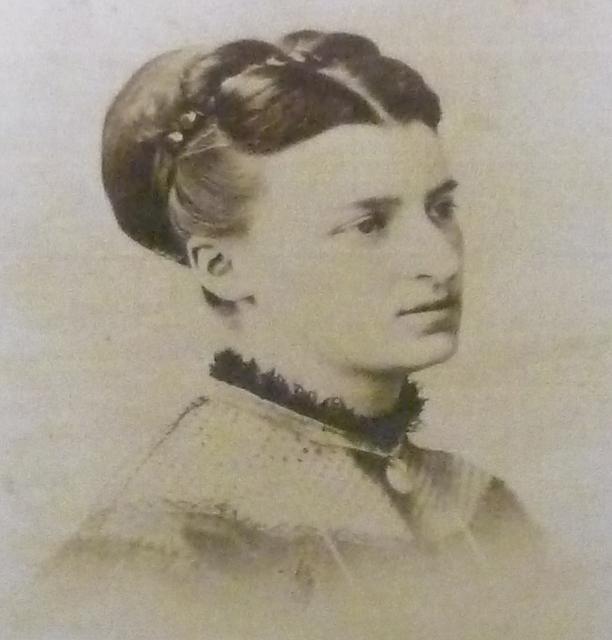
IntroductionAnna Rosalie Boch was a Belgian artist, collector, and patron who gained fame as the only person to purchase a painting from Vincent van Gogh during his lifetime. Her most notable acquisition was the painting titled "Red Vineyards in Arles," which is now valued at over 90 million dollars.
Early Life and Influences
Anna Boch was born on February 10, 1848, in Saint-Vaast, Hainaut, to a wealthy family. Influenced by the neo-impressionist Theo van Rysselberghe, she embraced the artistic style known as pointillism. However, Boch became most renowned for her impressionistic style, which she dedicated most of her career to. Boch was the niece of Octave Maus, a significant figure in the birth of Art Nouveau. She was also a member of the XX group, a collective of twenty Belgian artists, designers, and sculptors formed by Maus in 1883.
Connection with Vincent van Gogh
Boch's brother, the Franco-Belgian artist and poet Eugène Boch, was friends with Vincent van Gogh. Anna's home was a gathering place for "musical Mondays," attended by many influential individuals. However, Boch's name is primarily associated with being the only person to purchase one of van Gogh's paintings while he was alive. She acquired "Red Vineyards in Arles" in 1890 at an exhibition organized by the XX group in Brussels. After van Gogh's passing, she also became the owner of his work "Flowering Peach Trees." Both of van Gogh's paintings were displayed in her music salon at her home in Ixelles before being sold to a Parisian gallery.
Reasons for Selling the Paintings
There are different speculations about why Boch decided to part with the paintings. One theory suggests that she sold them to raise funds to purchase Georges Seurat's painting, "The Seine at Grand Jatte." According to a Belgian architect named Victor Horta, Boch gave up the van Gogh paintings when she moved to a new house in 1901, which followed the "more geometric version of Art Nouveau" that was in vogue. An English-language resource suggests that "Red Vineyards in Arles" and "Flowering Peach Trees" were sold at different times, with one being sold in 1906 and the other in 1910. The proceeds from the sales were used to acquire works by the French neo-impressionist Paul Signac. However, another interpretation suggests that Boch sold the paintings because they hindered her own artistic endeavors.
Later Life and Legacy
Anna Boch passed away on February 25, 1936, in Ixelles. Her art collection was sold, and according to her will, the proceeds went towards providing pensions for her impoverished artist friends. Her niece, Ida van Haëlewijn, the daughter of her gardener, inherited Boch's own work, consisting of at least 140 paintings depicting Ida herself as a young girl in the garden. In 1968, the paintings were acquired by Boch's great-nephew, Luitwin von Boch, the CEO of Villeroy & Boch Ceramics. The paintings remained in the Haëlewijn house until Ida's death in 1992. An exhibition called "The Anna & Eugène Boch Expo" featuring these artworks was opened on March 30, 2011.
According to Boch's wishes, some of her paintings were donated to various museums, including the Royal Museums of Fine Arts in Belgium. Different exhibitions dedicated to Boch's works and life have taken place at the Royal Museum Mariemont in Morlanwelz in 2000 and at the Vincent van Gogh House in Hoogeveen in 2010. Boch's name is primarily associated with renowned museums such as the Pushkin Museum in Moscow, the Musée d'Orsay in Paris, and the Vincent van Gogh House in Zundert, Netherlands. In 2005, Belgian historian Dr. Thérèse Thomas published a catalog of Boch's works with brief explanations. In 2010, the same historian and distant relative of Anna opened the website AnnaBoch.com. Since 2011, the exhibition center "Cremerie de Paris" near the Louvre has been in charge of editing the website.


