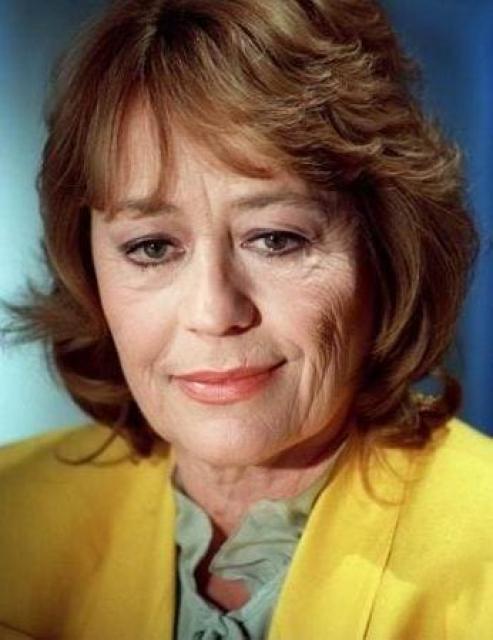
Annie Girardot
 France
Annie Girardot was one of the defining French screen performers of the 1960s and 1970s: a magnetic, emotionally direct actor who could make women’s ordinary struggles feel urgent and larger than life. She worked across theatre, popular comedy, melodrama, and art cinema, becoming a star in France and Italy. After a quieter period in her career, she returned to major acclaim with award-winning roles in Les Misérables and The Piano Teacher.
Training and first roles
Born in Paris on 25 October 1931, Girardot initially considered following her mother into nursing, but she was drawn to the stage. She studied at the Conservatoire de la rue Blanche and graduated in 1954 with honors in both classical and modern comedy. She joined the Comédie-Française that year, building her craft in repertory theatre before moving into film and television. Early in her career she also worked in cabarets while studying, gaining the stage confidence and timing that became hallmarks of her performances.
Her screen career began in the mid-1950s. One of her early turning points was Luchino Visconti’s Rocco and His Brothers (1960), where her performance as Nadia, a woman caught in the destructive orbit of the Parondi family, brought her international attention. She continued working in both France and Italy, appearing in films by major directors including Visconti, Marco Ferreri, and Claude Lelouch. In 1965, she won the Volpi Cup for Best Actress at the Venice Film Festival for Marcel Carné’s Three Rooms in Manhattan.
A star of modern French cinema
Girardot built a reputation for portraying forceful, complicated women with an unmistakably contemporary energy. She brought both grit and humor to her roles, often playing characters who were working, independent, and struggling to balance public responsibilities with intimate lives. In André Cayatte’s Mourir d’aimer (1971), inspired by the real case of teacher Gabrielle Russier, she gave a poignant performance as a teacher in a scandalous relationship with a student. The film became a major success and made her a figure of public conversation.
In the 1970s, Girardot became one of France’s most popular actresses. She moved easily from dramas into comedies and appeared in films such as Docteur Françoise Gailland (1976), where she played a successful physician whose cancer diagnosis forces her to reconsider a life built around work. The role earned her the César Award for Best Actress in 1977. Other films of the period cast her as a police commissioner, a mother under pressure, or a professional woman taking control of her own life. Her energetic voice, expressive face, and lack of screen polish helped audiences see her as both a star and an everywoman.
Renewed acclaim
Girardot’s film work slowed during the 1980s, as she found fewer roles that matched her abilities. She later returned to the spotlight with a celebrated supporting performance in Claude Lelouch’s Les Misérables (1995), winning the César for Best Supporting Actress in 1996. In Michael Haneke’s The Piano Teacher (2001), she played the mother of Isabelle Huppert’s character, a role that brought her a third César, again for Best Supporting Actress, in 2002. The recognition affirmed her stature across generations of French cinema.
Her life away from the screen included a marriage to Italian actor Renato Salvatori, whom she met while working in Italy. They married in 1962 and had one daughter, Giulia. The couple later separated, though they remained legally married until Salvatori’s death in 1988.
Illness and legacy
In 2006, Girardot’s family made public that she had Alzheimer’s disease. The illness gradually took her away from the profession that had defined her life. A 2008 television documentary, Ainsi va la vie, brought attention to her experience and to the impact of the disease on families. She died in Paris on 28 February 2011, aged 79.
Girardot’s body of work includes more than a hundred films, along with substantial theatre and television performances. She remains remembered for an unusually broad range: the vulnerable young woman in Rocco and His Brothers, the controversial teacher in Mourir d’aimer, the working mother and professional women of 1970s cinema, and the late-career performances that won her a new generation of admirers. Her career made emotional honesty and lived experience central to French screen acting.