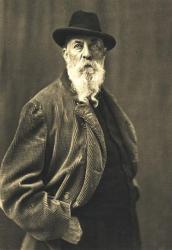
Anselm Feyerbah
 Germany
- Anselm Feuerbach: A German Master of the 19th Century
- Early Education and Influences
- Early Works and Recognition
- Roman Triumphs
- Later Years and Legacy
Anselm Feuerbach: A German Master of the 19th Century
Anselm Feuerbach, one of the most celebrated German historical painters of the 19th century, left a significant mark on the art world. Born to Anselm Joseph von Feuerbach and a nephew of the philosopher Ludwig Feuerbach, he embarked on his artistic journey with determination.
Early Education and Influences
Feuerbach's passion for art blossomed at the Freiburg Lyzeum. In 1846, he honed his skills at the Düsseldorf Academy under Friedrich Wilhelm Schadow. Yet, dissatisfied with its pious style, he migrated to Munich in 1848, where he immersed himself under the tutelage of Carl Rahl. To refine his color palette, Feuerbach traveled to Antwerp and Paris, drawing inspiration from masters like Édouard Manet and Jean-Auguste-Dominique Ingres.
Early Works and Recognition
Feuerbach's debut painting, "Hafiz in der Schenke" (1852), showcased his adherence to Manet's style. After spending time in Karlsruhe, he created "Tod des Pietro Aretino" (1857), a masterfully composed piece reflecting the influence of Venetian masters and his penchant for somber gray tones.
Winning a scholarship to Italy, Feuerbach reveled in the artistic treasures of Venice. His "Pietà" (1863) and "Beatrice" (1864) exemplified his mastery of religious themes. In Rome, he found a patron in Baron Adolf Friedrich von Schack, whose support proved instrumental in his fame.
Roman Triumphs
Feuerbach's Roman period yielded some of his greatest works. Among them were "Dante Begleitet von der edlen Frauen in Ravenna" (1857), "Arioste bei den Damen von Ferrara" (1862), and "Francesca da Rimini und Paolo Malatesta" (1863). His "Medea Vor ihrer Flucht" (1870) and "Das Urteil des Paris" (1871) further solidified his stature as a master of historical painting.
Later Years and Legacy
In 1873, Feuerbach became a professor at the Vienna Academy of Fine Arts, but he resigned in 1878, acknowledging his limitations as an educator. His final years were spent in Venice, working on a commission for the ceiling of the Vienna Academy. Though he completed only a portion of it, "Sturz der Titanen," the project was finished posthumously by his students.
Anselm Feuerbach's unique blend of classicism and romanticism defined his style. His ability to create visually stunning, emotionally expressive compositions, and his mastery of form and movement distinguished him as an artist of exceptional talent. His works continue to captivate viewers with their beauty and enduring artistic value.